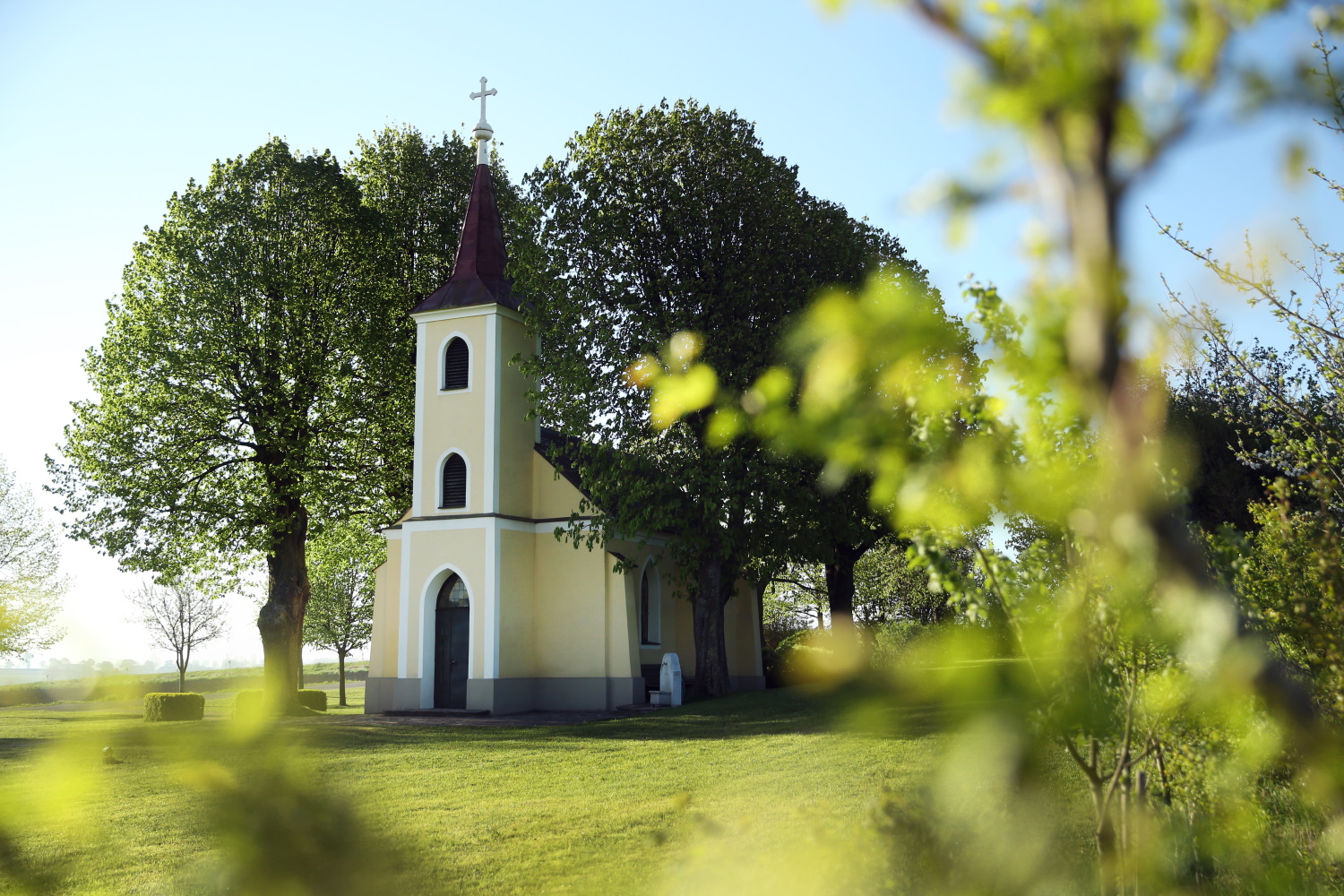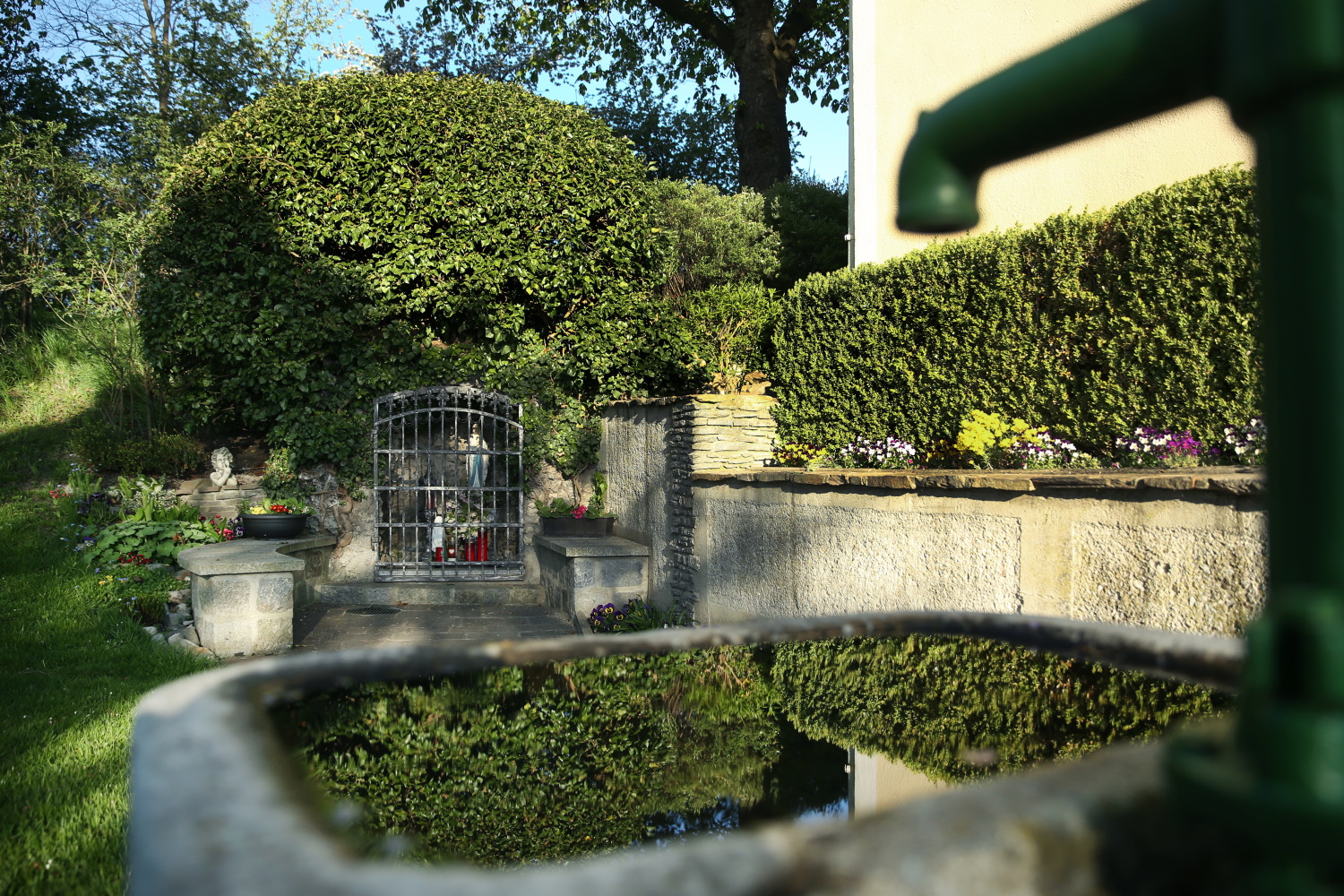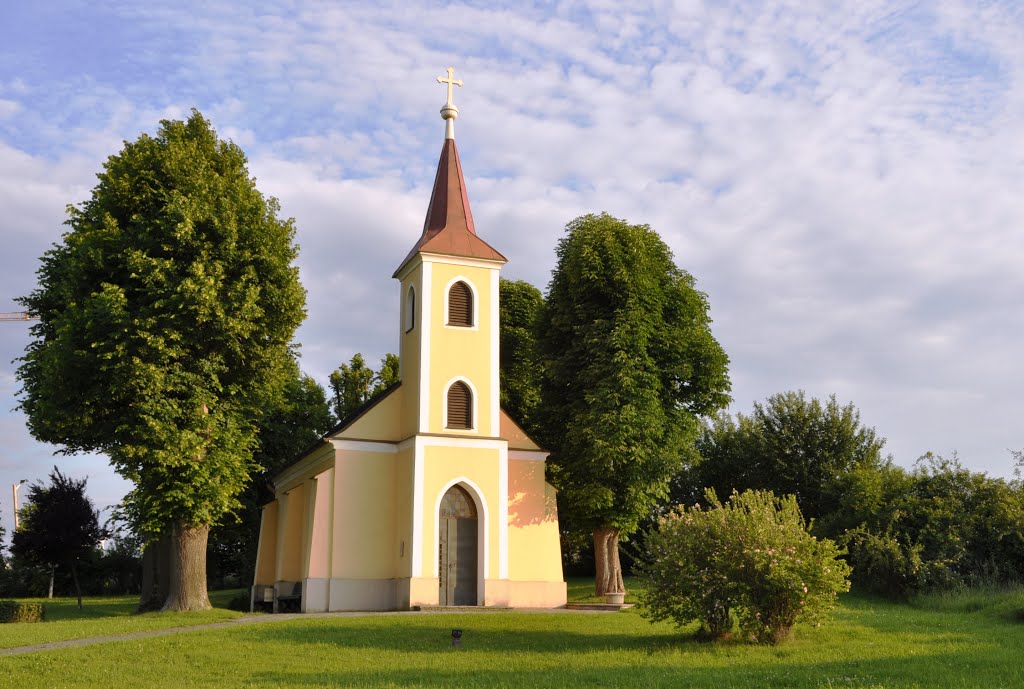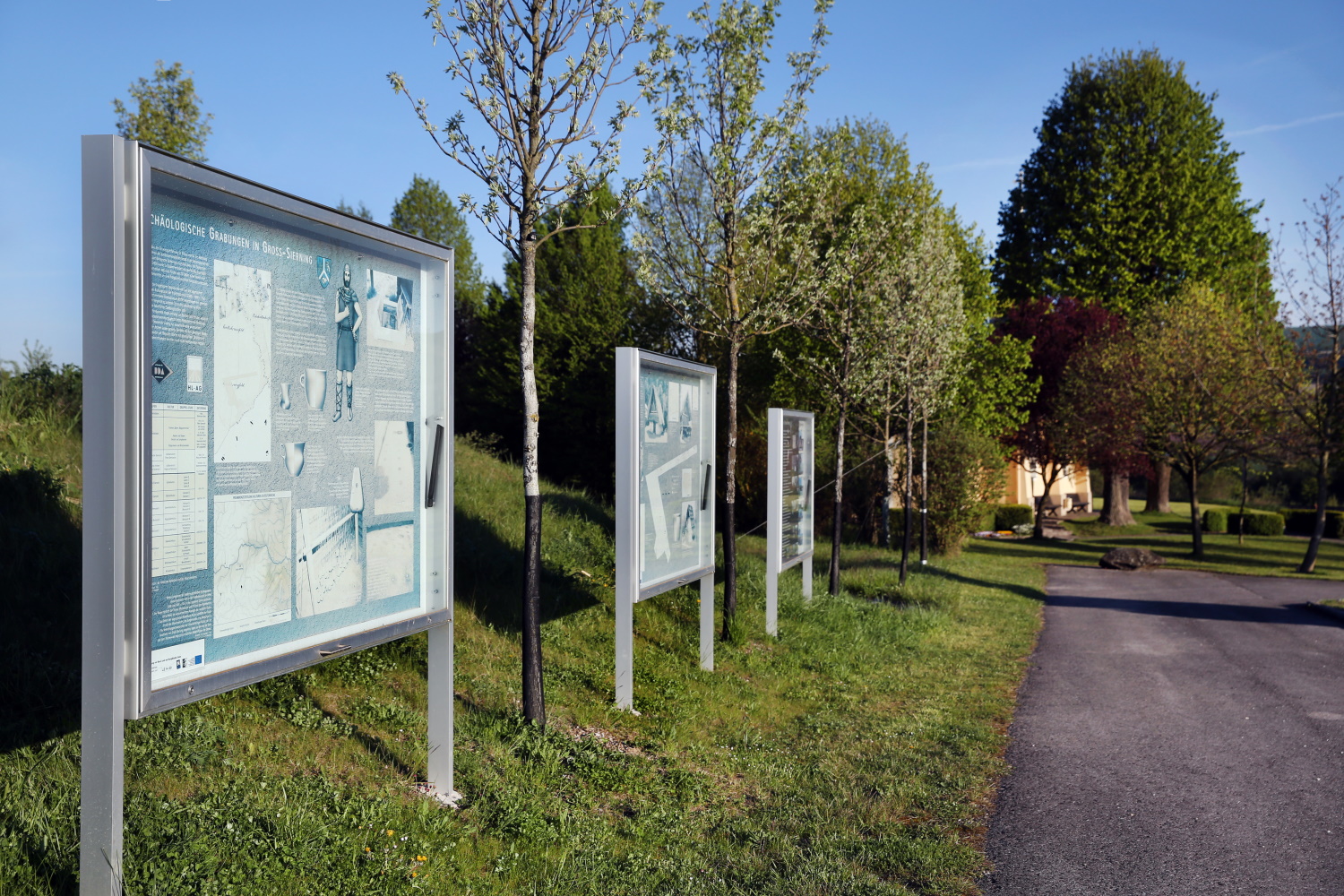
The existence of a "holy well" can be traced back to around 1820. It is likely that the "knowledge" of the good healing water - today it is thought to be of a so-called "dextrorotatory intensity" - goes back to much earlier times. The location of the spring was marked with a statue and an image of the Virgin Mary with the divine child. In 1849, a small chapel without a tower was built and four chestnut trees were planted around it. The spring with its crystal-clear water seemed to have extraordinary power. With the many donations from the faithful and benefactors, it was possible to start building the small chapel in 1913. On June 7, 1914, the expanded shrine, which was entrusted to Our Lady, was consecrated. In a decree dated 23 May 1914, Bishop Johannes Baptist Rößler granted the chapel permission to say Mass here, with the following content: "The newly built chapel "zum heiligen Bründl" in Gross Sierning is granted a Mass license, but only with the consent of the local priest and only on workdays may Holy Mass be said there. The license was to have no force if the chapel was also used for secular purposes or was not kept in good condition or was not provided with the necessary accessories.... This letter of grace should always be displayed in the aforementioned chapel for everyone's inspection. + Our blessing to the parish of Gross Sierning!"
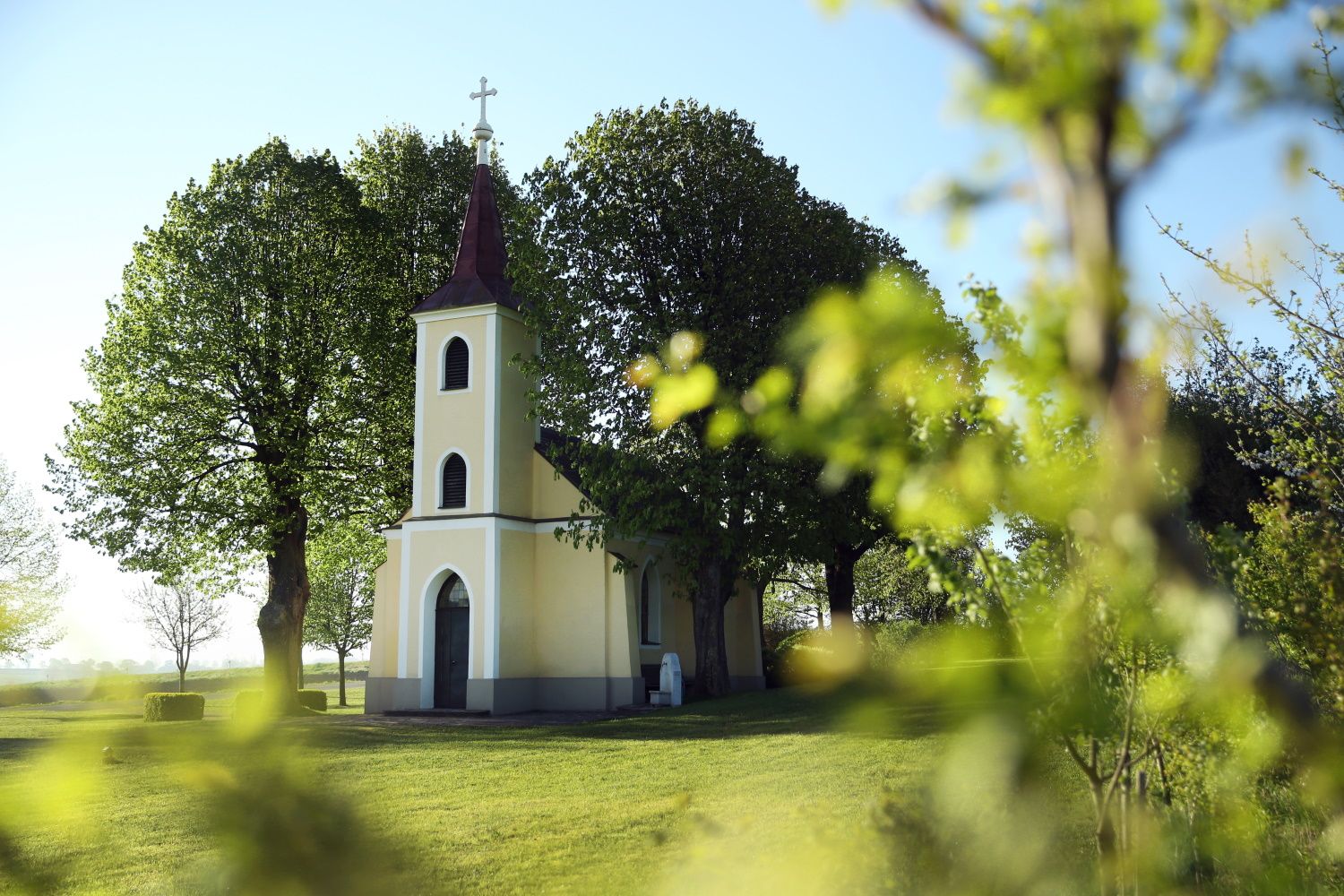
On June 8, the first Holy Mass was celebrated in the Bründl Chapel with Father Franz Tiefenbacher. The new building in neo-Gothic style was now complete: The tower contributed significantly to the façade design. It housed a 63 kg bell. Benches were placed in the niches of the buttresses, inviting visitors to take a break. Inside, the chapel is plain and simple. The ogival barrel vault ends in the apse, the four windows - also ogival - flood the room with daylight. The stipes, the lower part of the altar, is made of brick, while the mensa and predella (altar table and altarpiece) are made of wood. The chapel has room for around 50 people. It now stood in an open field, surrounded by newly planted trees. It is probably still a symbol of the sense of sacrifice of the community of Haunoldstein and its surroundings. In April 1969, the wood sculptor Josef Sieberer from Vienna created the 120 cm high wooden sculpture "Madonna and Child". A few years later, on July 30, 1978, the two relief images "Death on the Cross" and "Resurrection", carved from lime wood, were blessed in a solemn service. In 1989, a new exterior renovation of the chapel was necessary. The interior renovation began in 2013, one year before the 100th anniversary of the chapel. Former mayor and honorary citizen Ferdinand Hierner donated an electric chime on the occasion of his 80th birthday and the Bründl bell has been ringing for morning, midday and evening prayers since summer 2014. The renovated chapel and the new altar were blessed by Pastor Christof Heibler during a ceremony on September 13, 2014 and reopened to the faithful and pilgrims.