Pfarrkirche Oberstrahlbach
Church
-
Oberstrahlbach parish church©
Description
Information about the church
Oberstrahlbach was first mentioned in documents in 1139 as Scelebaes. The name Stralbach appears in 1157. The name means something like "stream whose water flows quickly". It is derived from Strahlbach, which, coming from Oberstrahlbach, flows through Niederstrahlbach and the so-called Demutsgraben towards Zwettl Stadt, where it joins the Zwettl River.
In an inheritance dispute with Zwettl Abbey, Euphemia von Kuenring renounces the Strahlbach estate in favor of the monastery. The deed of settlement from 1256 can be found in the monastery archives.
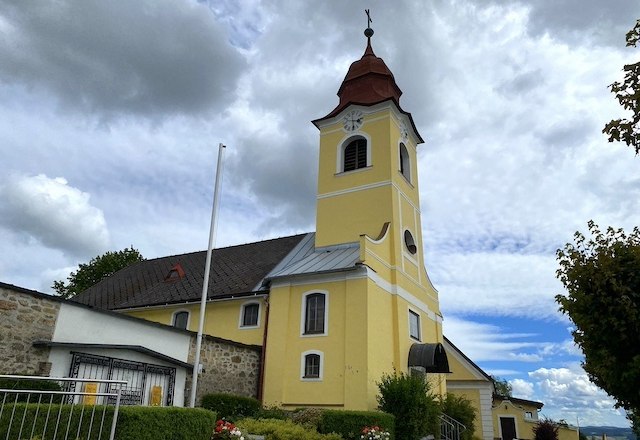
The Roman Catholic parish church of the Holy Trinity is a baroque building dating from 1700-1706. In 1798 it was given a west tower and in 1827 a choir extension. The two-storey tower with round sound windows and oval windows has a late Baroque dome. Its façade is simply structured by plaster bands. The church is connected to the cemetery and the vicarage to form a single unit.
Treat yourself
The Oberstrahlbach parish church is dedicated to the Holy Trinity. The Holy Trinity, also known as the Holy Trinity, is a central mystery of the Christian faith, which encompasses the unity and communion of God the Father, God the Son (Jesus Christ) and God the Holy Spirit.
Holy Trinity
The Holy Trinity describes how God exists in three persons who are bound together in perfect unity and love.
This relationship between Father, Son and Holy Spirit is characterized by eternal love and fellowship. Each person of the Trinity is fully God, and yet there is only one God. This mystery is at the heart of the Christian faith and reveals how God in his innermost nature is relationship and communion.
"Treat yourself"
The connection between "Treat yourself" and the Holy Trinity can be seen on several levels:
1. inner harmony and unity: the Trinity shows that true unity and harmony lie in relationship and mutual devotion. In this context, "indulge yourself" could mean that we should take the time to come into inner harmony and bring the different aspects of our being - our thoughts, feelings and actions - into harmony. This reflects the perfect unity and harmony of the Trinity.
2. relationship and community: The Trinity teaches us that as human beings we are called to live in relationship - both with other people and with God. "Treat yourself" can also mean that we consciously take time to cultivate and deepen our relationship with God. In silence and prayer, we can understand ourselves better and strengthen our relationship with God, who lives in the Trinity.
3. self-reflection and knowledge of God: The Trinity shows that God in His nature is relationship. "Indulge yourself" can mean engaging in reflection and meditation to recognize the presence of God in our lives and to understand how this relationship shapes our lives. By allowing ourselves time for this spiritual practice, we can delve deeper into the mystery of God and experience his love and guidance in our lives.
Conclusion
"Indulge yourself" in connection with the Holy Trinity means consciously taking time and space to cultivate the inner unity and harmony that God reflects in his triune nature. It reminds us that we are called to live in relationship - with ourselves, with others and with God. Through self-reflection, prayer and awareness of the divine presence, we can deepen this relationship and renew ourselves in the love and communion of the Trinity. By allowing ourselves time for this spiritual practice, we can experience the fullness and unity that is present in God himself.
"The grace of the Lord Jesus Christ and the love of God and the fellowship of the Holy Spirit be with you all." (2 Corinthians 13:13)
This biblical passage brings together the three persons of the Trinity and emphasizes the grace, love and fellowship that emanates from God in his triune nature. We are invited to indulge ourselves in this grace, love and fellowship by anchoring ourselves in our relationship with God and in inner contemplation.