Schloss Groß Siegharts
Castle
Description
Experience history, feel tradition
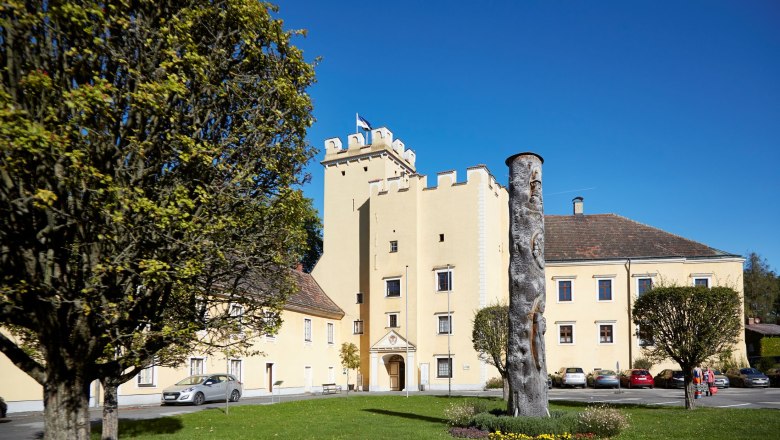
Around 1200, the noble Cotsrelve von Siegharts had a castle-like fortification built on the site of today's castle building by order of the Count of Raabs. Over the following centuries, various owners extended the building. During this time, the site was constantly ravaged by major events in world history such as the Hussite War and the Thirty Years' War - parts of the building were repeatedly destroyed. Only after the end of the border battles did it gradually develop into a castle, eventually being used only for residential purposes and remaining in the possession of noblemen for centuries. In 1876, Count Rudolf van der Straaten sells it and all the outbuildings to the Leyrer factory-owning couple. The municipality acquired the castle 120 years ago and today it is its official seat.
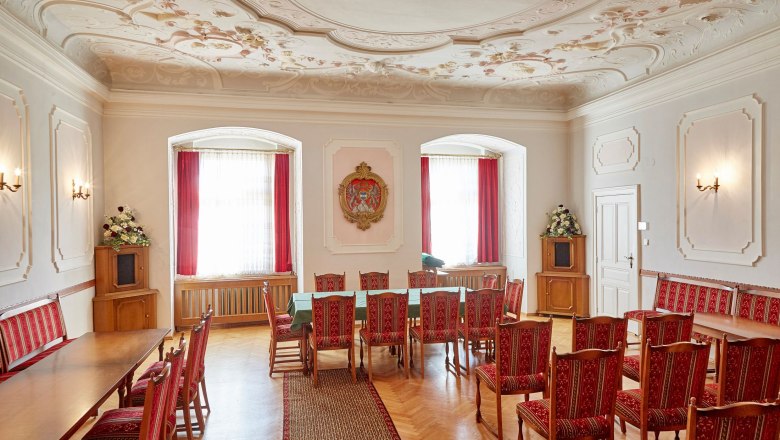
The renovation of the castle in the eighties of the 20th century was really successful in terms of style - the square towers with the mighty crenellated crowns have been preserved. The town's coat of arms is displayed above the "barrel-vaulted passageway", which leads to the arcaded courtyard. The stucco ceilings and wall paintings from the period between 1634 and 1645 are impressive. Frescoes by Carlo Carlone from 1717 were discovered a few years ago in the former castle chapel, which was previously used as a library and is now the mayor's office. A treasure trove of art to delight the eyes and mind.
Origin of the Bandlkramerland
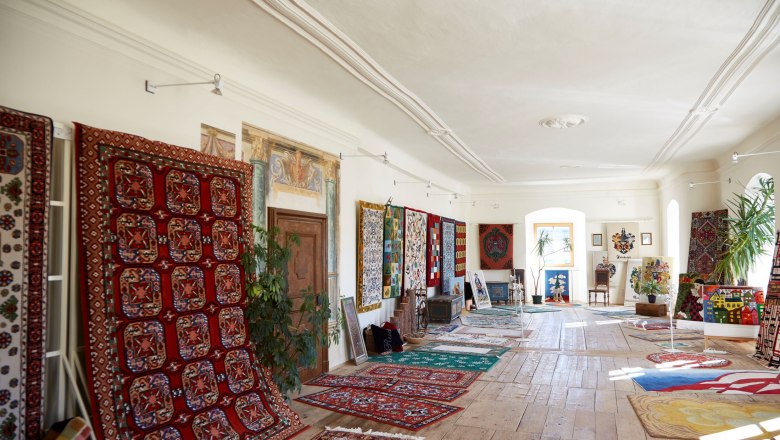
The Textile Museum presents a piece of the region's history in a lively rather than dusty way: around 1920, Johann Christoph Ferdinand Count von Mallenthein pursued the goal of turning the small village under his rule into a center of the textile industry. He had 180 "Fabrics-Häusl" built in Groß-Siegharts for skilled workers from all over Europe. The "Bandlwaren" produced were offered for sale by the "Bandltragern" in the countries of the Danube Monarchy. Since then, the region has been known as "Bandlkramerlandl". Looms, textile machines and a fully functional transmission system can be viewed in the museum.
The castle can be visited by appointment during the opening hours of the municipal office.