Schloss Rosenau
Castle
-
Rosenau Castle©
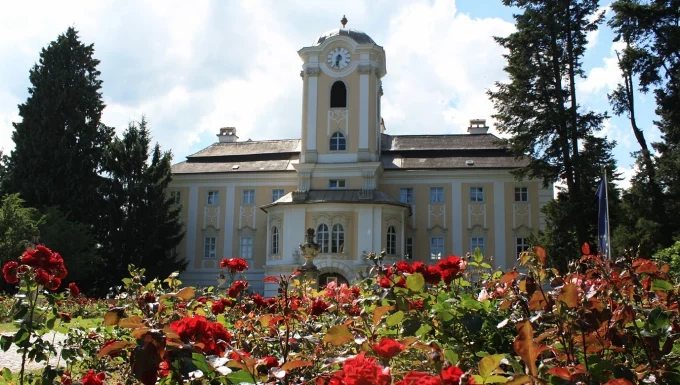
Description
History of the castle
The history relevant to the Freemasons began in 1736 with the Baroque expansion, which also included the buildings around the castle. To this day, the church, vicarage, school, hospital and other buildings form a unique ensemble which, as a well-preserved Baroque estate, is a special sight in its own right.
Count Schallenberg, the heir to the castle, came into contact with Freemasonry at the court of Maria Theresa. Consequently, this was also the reason that prompted him to develop his estate in Rosenau into an institution for the benefit of the simple, peasant working people.
The owners who followed Schallenberg's death in 1800 were no longer aware of the castle's significance as a Masonic site. It was only when the castle was renovated in 1972 that the Masonic symbols such as compasses and squares were discovered and painted over.
Rosenau Castle today
Since the establishment of the Masonic Museum, regular meetings have been held in the historic rooms. Nowhere else can ritual work be carried out in a historic temple dating back to the founding period of freemasonry in Central Europe.
But Rosenau has even more to offer than that. Constantly changing exhibitions, readings and concerts, as well as carriage rides, make a stay at the 4-star superior Schlosshotel Rosenau a very special experience.