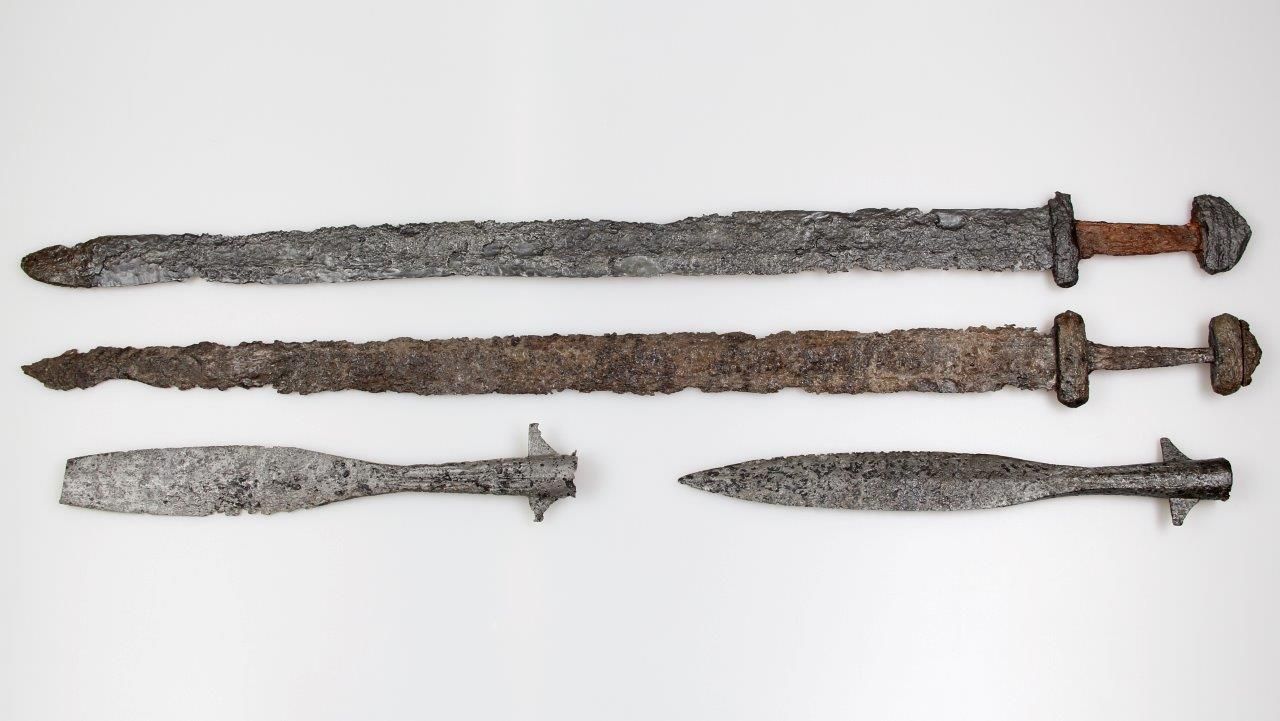
Description
The cemetery, which dates back to the 8th and 9th centuries AD, was once located on the border between the Frankish Empire and the Avars who settled to the east - which is reflected in the finds.
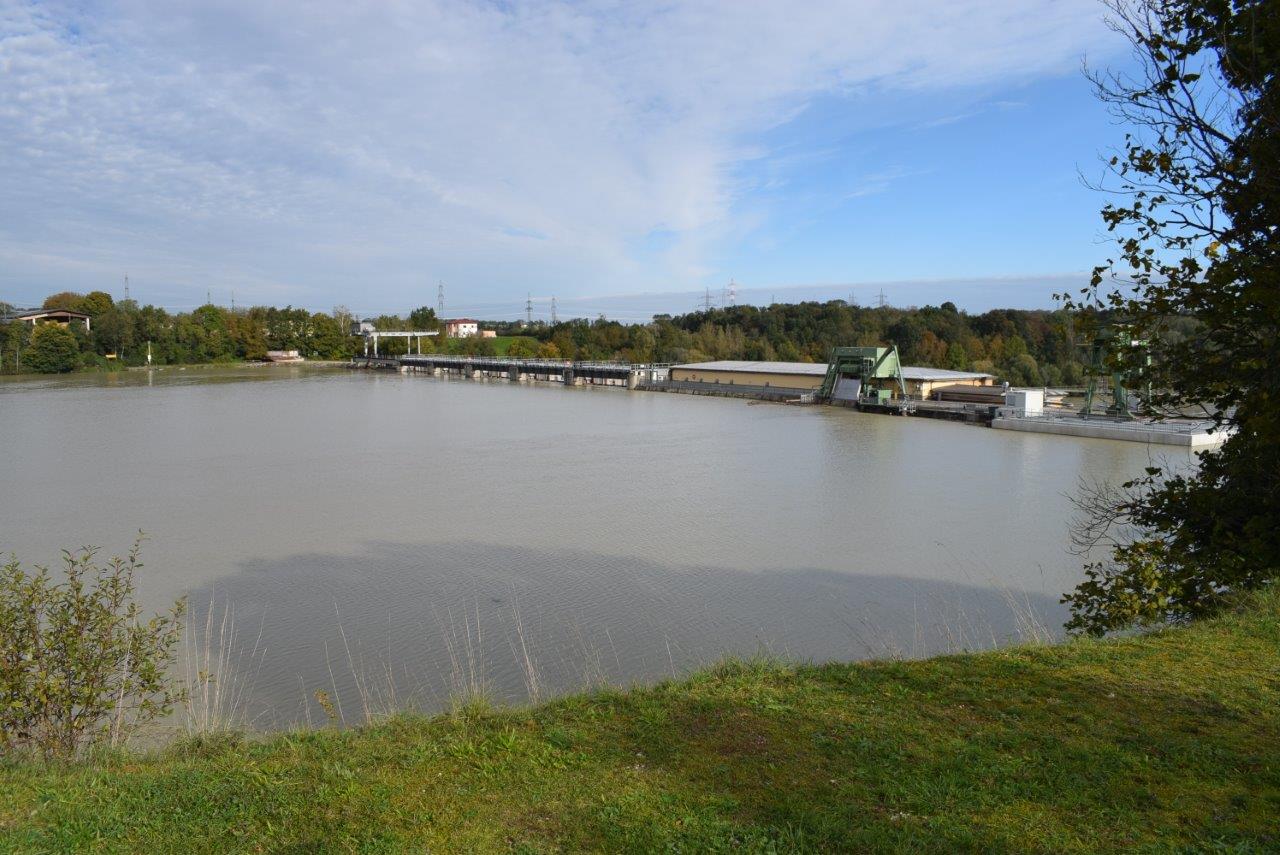
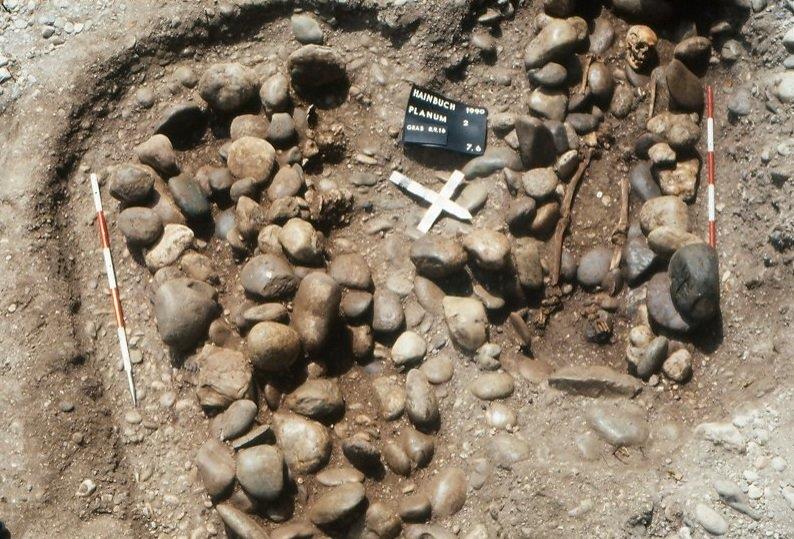
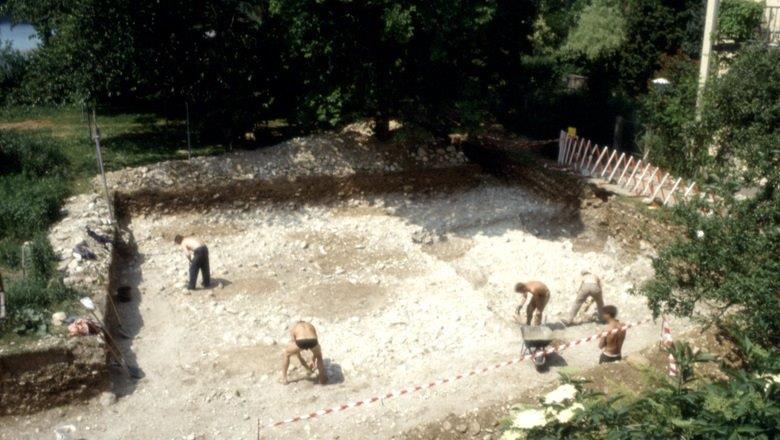
In 1942 and 1943, early medieval graves from the 8th to 9th century AD were found in the Hainbuch district during the construction of the Enns power plant at Staning. In 1990 and 1991, further burial sites were unearthed during an excavation, meaning that at least 58 burial sites could be documented in the shallow burial ground. The dead were laid unburnt in a supine position, predominantly facing west-east.
The border of two kingdoms
The Hainbuch cemetery was located in a border area that was also a contact zone. Historically, the River Enns separated the Duchy of Bavaria, which fell under the sovereignty of the Carolingian Empire in the late 8th century, from the adjacent Khaganate - the title "Khagan" corresponded to that of an emperor - of the Avars to the east. From an archaeological point of view, the western part of the Eastern Alps is the area of the Bavarian terraced cemeteries, which gradually turned into Christian church cemeteries. In the area of the Avar Empire, on the other hand, there are pagan inhumation cemeteries with characteristic grave goods.
Grave goods from east and west
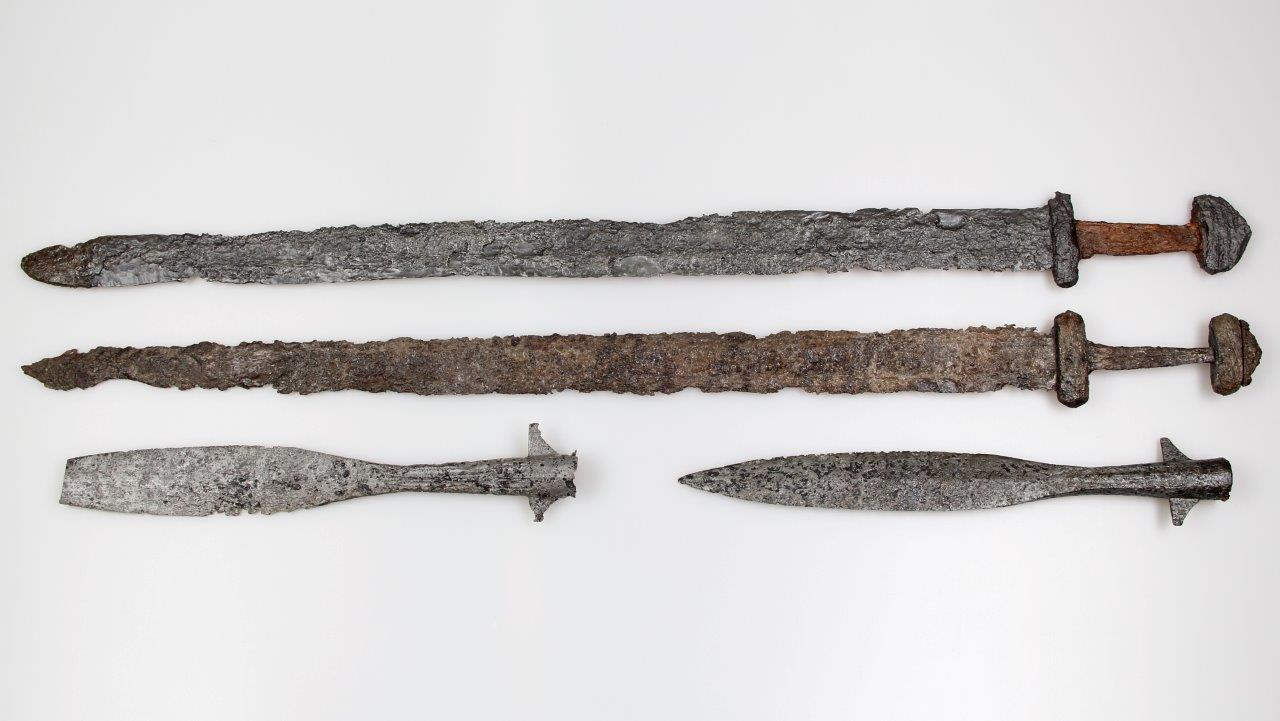
The border location of the cemetery is also reflected in the finds. In addition to Avar non-ferrous metal bracelets, wire earrings or wire earrings with button decoration, finger rings and typical clay vessels, there are also objects of western origin that are attributed to the Bavarians or the Carolingians. In the women's costume, these are mainly necklaces with colorful glass beads, chain earrings and characteristic headdress rings. The western equipment of the men consists mostly of winged lances, swords and spurs. A special piece is the sword from grave 28, a so-called spatha with a triangular pommel and damascened blade. Such extremely high-quality swords are widespread from the Netherlands to Schleswig-Holstein, Thuringia and Bavaria and date to the second half of the 8th century AD.