The prisoner-of-war camp in Purgstall an der Erlauf
Historical sites

Description
The enormous number of prisoners made it necessary to set up separate camps for them for the first time during the First World War. One of these was located in Purgstall an der Erlauf.
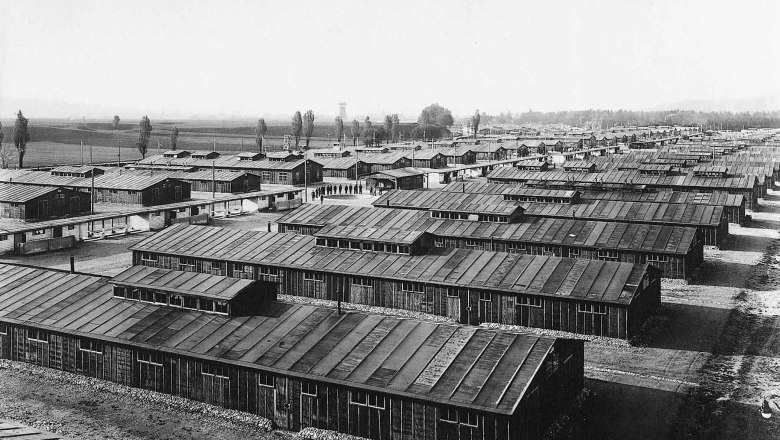
Thanks to the attentiveness of a local resident, parts of the former imperial and royal prisoner-of-war camp in Purgstall an der Erlauf were discovered in advance of construction work. POW camp from the First World War could be archaeologically investigated. The foundations of four prisoner barracks were found, which - unlike the concreted barracks from the Second World War - were pure post structures made of wood. The barracks each measured approx. 20.70 m in length and approx. 10.40 m in width. A shallow ditch between the buildings probably served as drainage.
Life in the prison camp
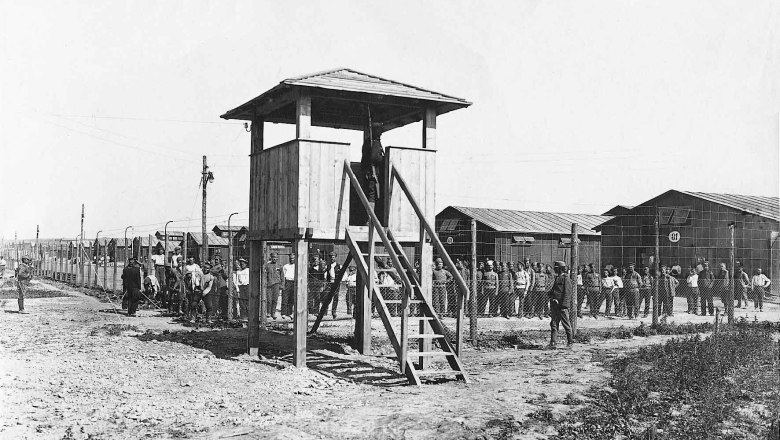
The prisoner of war camp in Purgstall was established in April 1915, it covered an area of 50 hectares and could accommodate 24,500 prisoners. Camps such as this one had become necessary as the usual accommodation of prisoners of war in military barracks or fortresses was no longer possible due to their large numbers. Entire barrack towns were built, in which not only the prisoners lived, but also the infrastructure for supply and bureaucratic administration was housed. There were also workshops where the prisoners produced simple consumer goods. The conditions of captivity were precisely regulated in the Hague Land Warfare Convention, the predecessor of the Geneva Convention. Officers were privileged, they did not have to work like enlisted men and were even entitled to servants. Crews were not allowed to be used for war efforts against their homeland, e.g. in the arms industry. Protection from disease and epidemics posed a particular challenge, which is why great importance was attached to hygiene.
From prison camp to summer resort
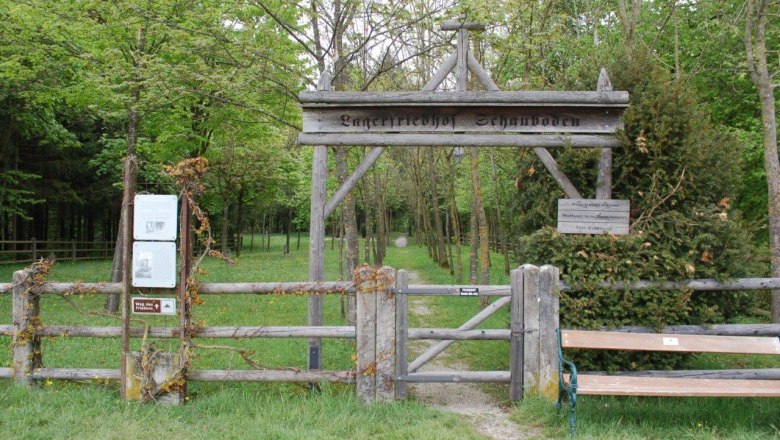
After the war, most of the barracks in Purgstall were demolished, but the foundations were used to build several two-storey residential buildings for the "Schauboden-Föhrenhain" summer resort settlement, which developed its own sports and leisure culture in the 1920s.
Tip: The four-kilometre "Path of Peace" leads through the former camp grounds and provides information about the life of the prisoners.