The alpine pasture is not a petting zoo
10 Rules for a safe holiday around cattle
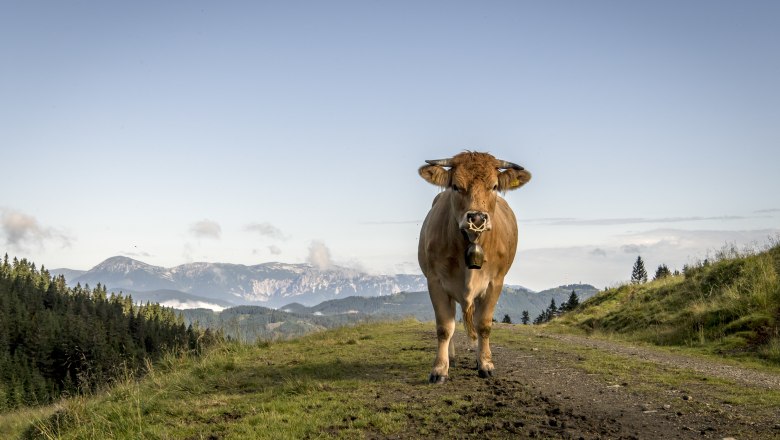
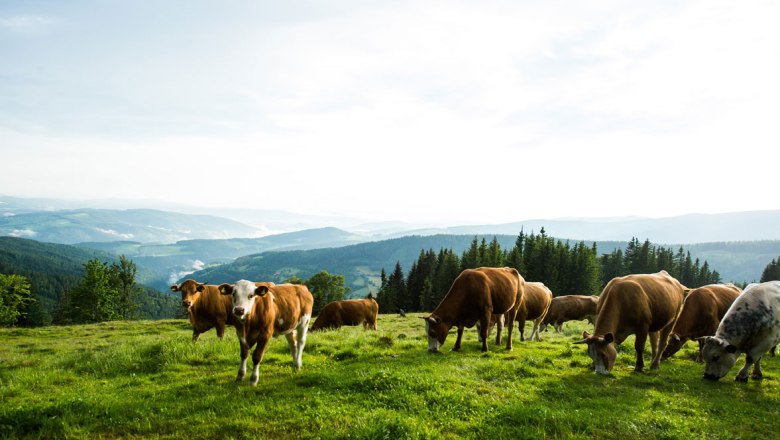
Cows are naturally peaceful animals. They do not attack humans on their own and do not see them as enemies. If cattle perceive “intruders,” they usually move away. They only become aggressive if they feel cornered or threatened. We have summarized some important basic rules for you to follow when hiking across alpine pastures in order to avoid dangerous encounters as best as possible.
1. Do not leave marked hiking trails on pastures
As a hiker, you should never leave the marked trail and never climb over fences. When entering fenced grazing areas, pass quickly through the gates and don’t forget to close them again afterward.
2. Pass animals quietly and at a distance
Let the cows graze undisturbed, do not touch them, and walk past at a normal pace, keeping a distance of 20 to 50 meters whenever possible. Do not approach them more closely than necessary. Always pass a herd from the side and slightly above, rather than walking through the middle.
3. Stay calm and avoid sudden movements
Cows are calm animals that startle easily. When crossing an alpine pasture, avoid quick, hectic movements, shouting, or imitating “cow sounds.” Even if animals approach you, remain calm, do not turn your back, and leave the pasture slowly. Never run away! Cows often act in sync – if one runs, the others follow. Don’t let this unsettle you.
4. No cow selfies, please
Cows have poor vision but nearly a 360° field of view, so they can be startled by movements beside or behind them. They may appear gentle and tame, but they could perceive a phone as a threat.
5. Do not look cows directly in the eyes
Direct eye contact is interpreted as a threat, and cows may try to defend themselves. Avoid staring into their eyes.
6. Be cautious around mother cows
Be especially careful with mother cows and their lively, curious calves! While herds of only females are usually accustomed to people, the situation changes when calves are present. Mothers impulsively defend their young out of instinct. Calves, however, are curious and often approach hikers. Extra caution is needed if bulls are also in the herd. Always keep your distance – never pet or feed calves, and always keep an eye on the mothers.
7. Dogs must always be kept on a leash
Before your hike, check whether you will need to cross a pasture with your dog and, if possible, look for alternatives. If crossing is unavoidable, keep the dog calm and under control, preferably in the middle of your group. Always use a leash, even behind pasture fences. Prevent the dog from approaching or chasing the herd. If your dog barks at cattle, avoid them with a wide detour. To cows, dogs appear as potential predators, especially to young animals, and mother cows may attack them. Bulls may also react aggressively to dogs in order to protect their herd.
8. In case of imminent danger, unleash the dog
If an attack seems unavoidable, immediately unleash your dog. The cow will usually chase after the dog. Unlike humans, dogs are faster and can escape. This gives the owner time to leave the danger zone. Only take obedient, confident dogs with you on hikes – fearful dogs may hide behind their owner and put them at risk. Never try to shield or defend your dog against cattle – you have no chance against a full-grown cow.
9. Watch for warning signals from the animals
Lowering the head, pawing the ground, bellowing, and snorting are signs of aggression. Cattle often stop and fixate on their target. A threatening cow lowers its head, presents horns or forehead, and moves closer. Stay calm, keep the animal in view, do not turn your back, and leave the pasture slowly.
10. In case of an attack, strike the nose
If an attack does occur, make yourself look big and raise your arms. In an absolute emergency, deliver a targeted blow to the animal's nose! Never run away; instead, retreat slowly without taking your eyes off the animals.
Through the use of alpine pastures, it is ensured that these areas do not become overgrown and remain accessible as recreation spaces. Therefore, always treat grazing livestock with respect and caution in their temporary “home.” By following these basic rules on your next hike, you can avoid unpleasant encounters and ensure a positive coexistence between humans and animals on the alpine pastures in the future.
Here is the link to the Austrian Federal Government’s action plan – Safe Alpine Pastures.