Spannberg
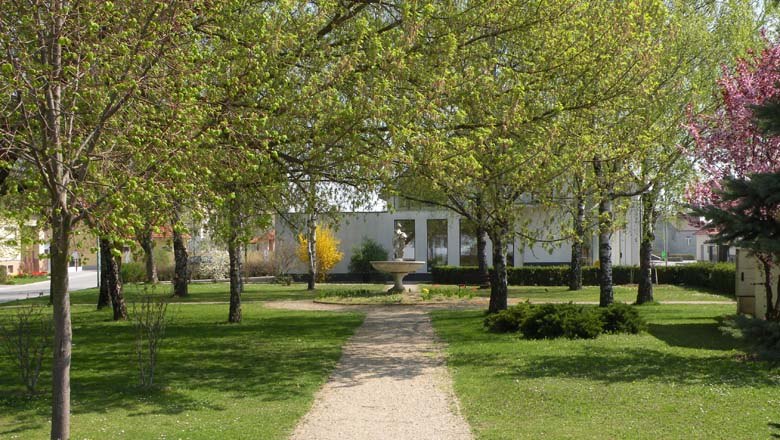


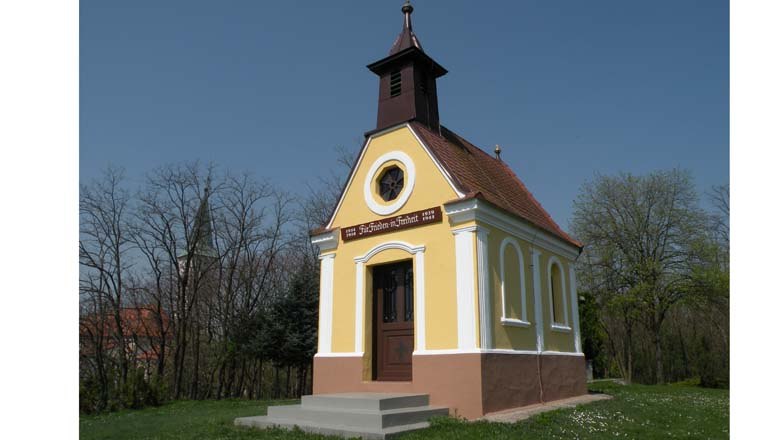
Spannberg is one of the oldest market towns in the Weinviertel. It has made a name for itself far beyond the district borders as a so-called wood cluster community thanks to its innovative businesses, particularly in the field of wood processing. Viticulture also plays an important role in the municipality, which has around 1000 inhabitants. It was first mentioned in a document in 1205 and became a market town in 1370.
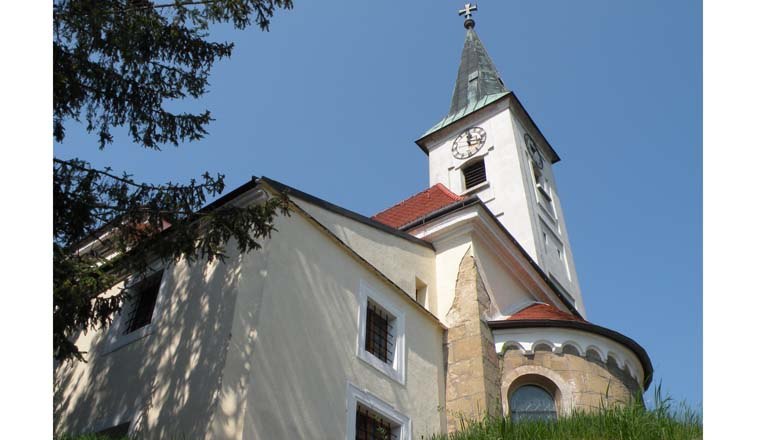
The church of St. Martin (10) dates back to the 12th century and was built on the site of a medieval fortification.
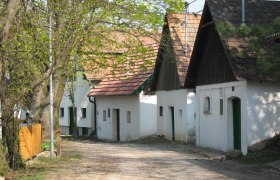
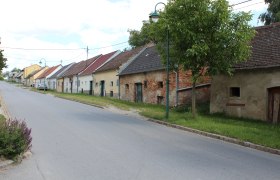
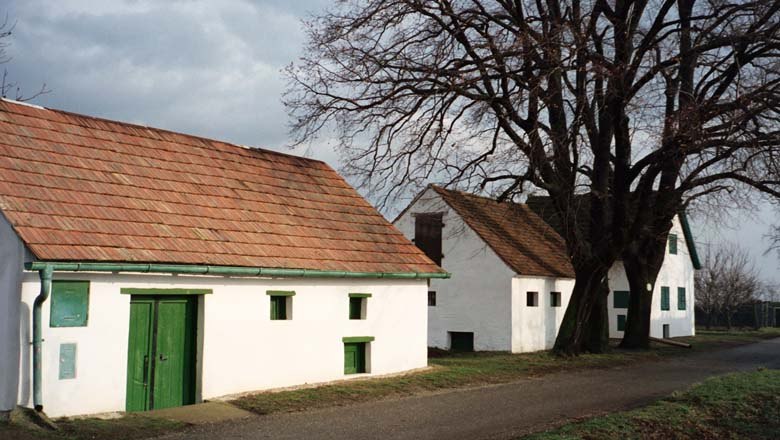
On a guided tour of the wine cellar lanes in one of the two wine cellar lanes in Eselgrund (11) or Am Quent (12), you can learn more about the history of Spannberg, viticulture and the wine cellar lanes - information and registration on + 43 664 73 225 437.
The educational wine trail (13) with the tree press from the 18th century offers the opportunity to learn about the many grape varieties and wines in the village. You can also look over the shoulder of barrel maker Stefan Wiesinger (14) as he makes a barrel. Registration under +43 2538 85208. Cultural events take place in the Pfarrstadl (15). The vaults of the vicarage house a vinotheque (16) where fine wines can be tasted - info: Spannberg municipal office + 43 25 38 8497.
Spannberg is located on cycle paths no. 7, 91 and 947 as well as on the "Traminer" and "Muskateller" themed cycle paths. Another attraction of the region is the Weinviertel Vineyard Walking. Exercise in a beautiful landscape through idyllic wine cellar lanes and picturesque vineyards, past wine taverns and wine inns along the Wine Road Weinviertel. In this and the surrounding communities, a total of 15 routes with a length of over 80 km are signposted, starting from the respective village center.
Grape varieties, soils, climate
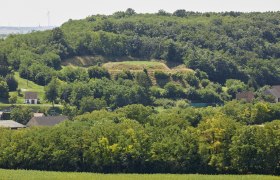
Spannberg is a wine-growing community with around 80 hectares of vineyards, located to the south at the foothills of the Matzner Wald forest and to the west towards Hohenruppersdorf. The soils in the region are medium-heavy and the majority consists of loess and loam, although this tends to be somewhat lighter on slopes. In addition to the main variety Grüne Veltliner, Pinot Blanc, Riesling and Zweigelt find very good conditions here.