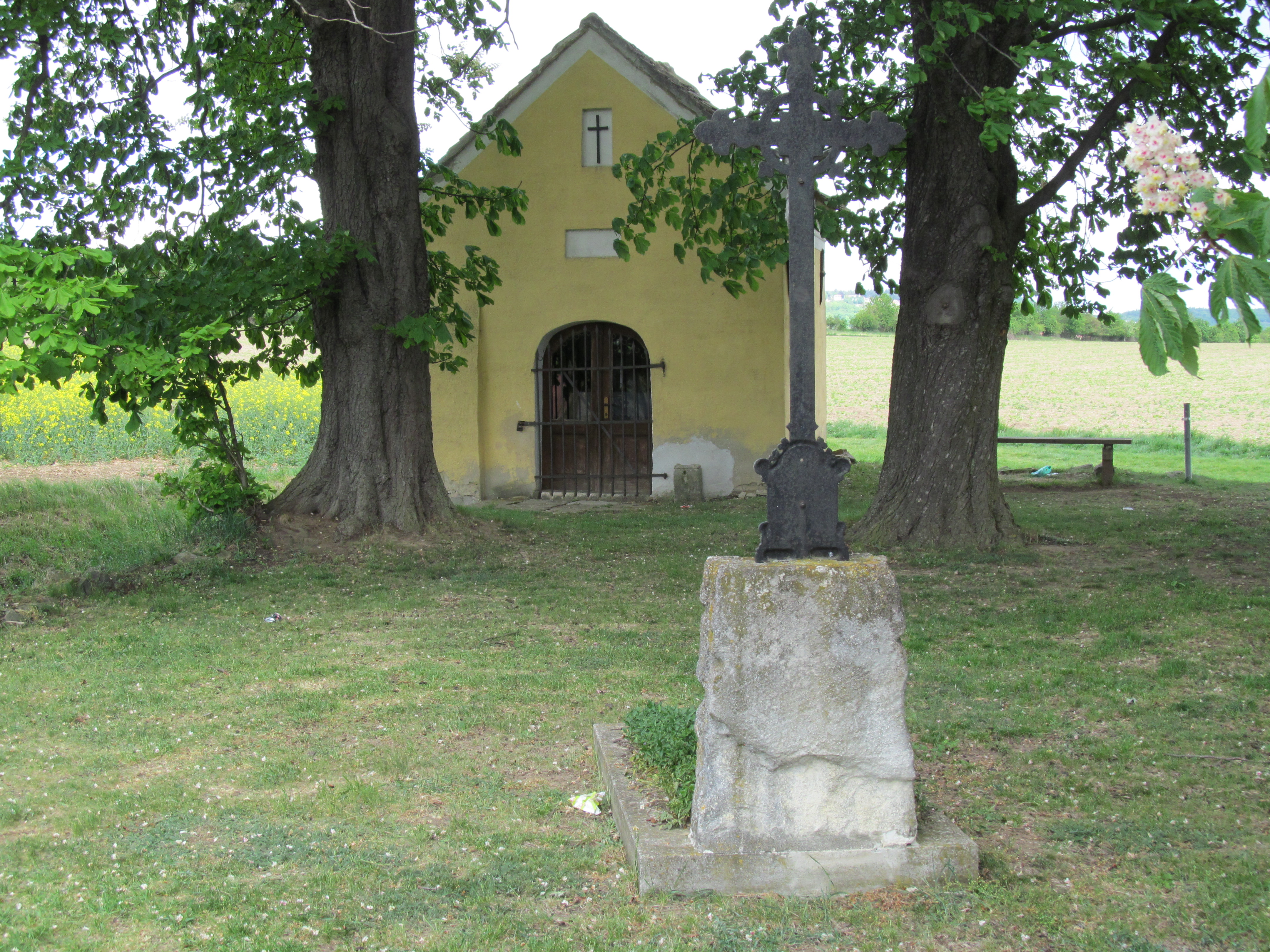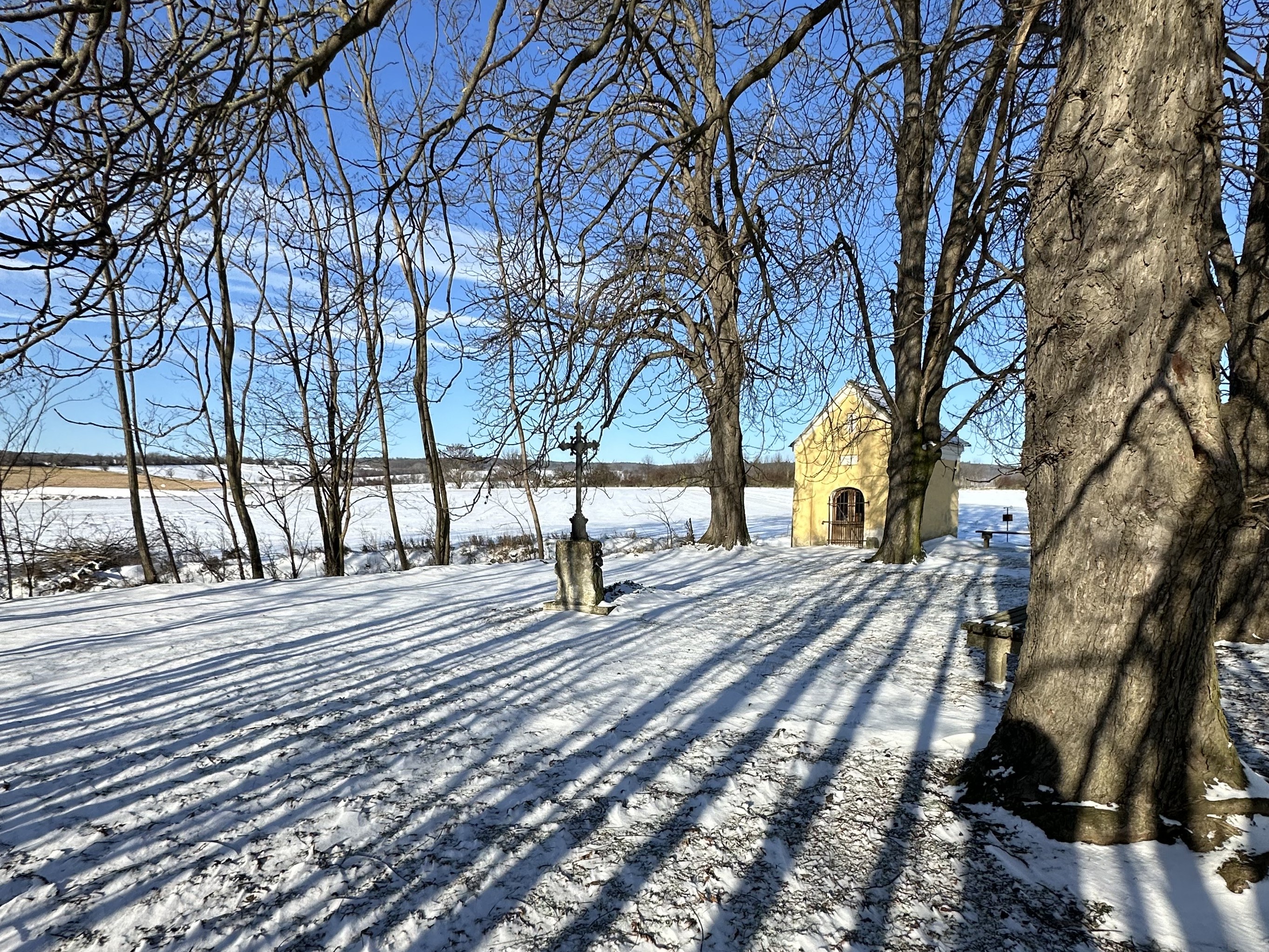
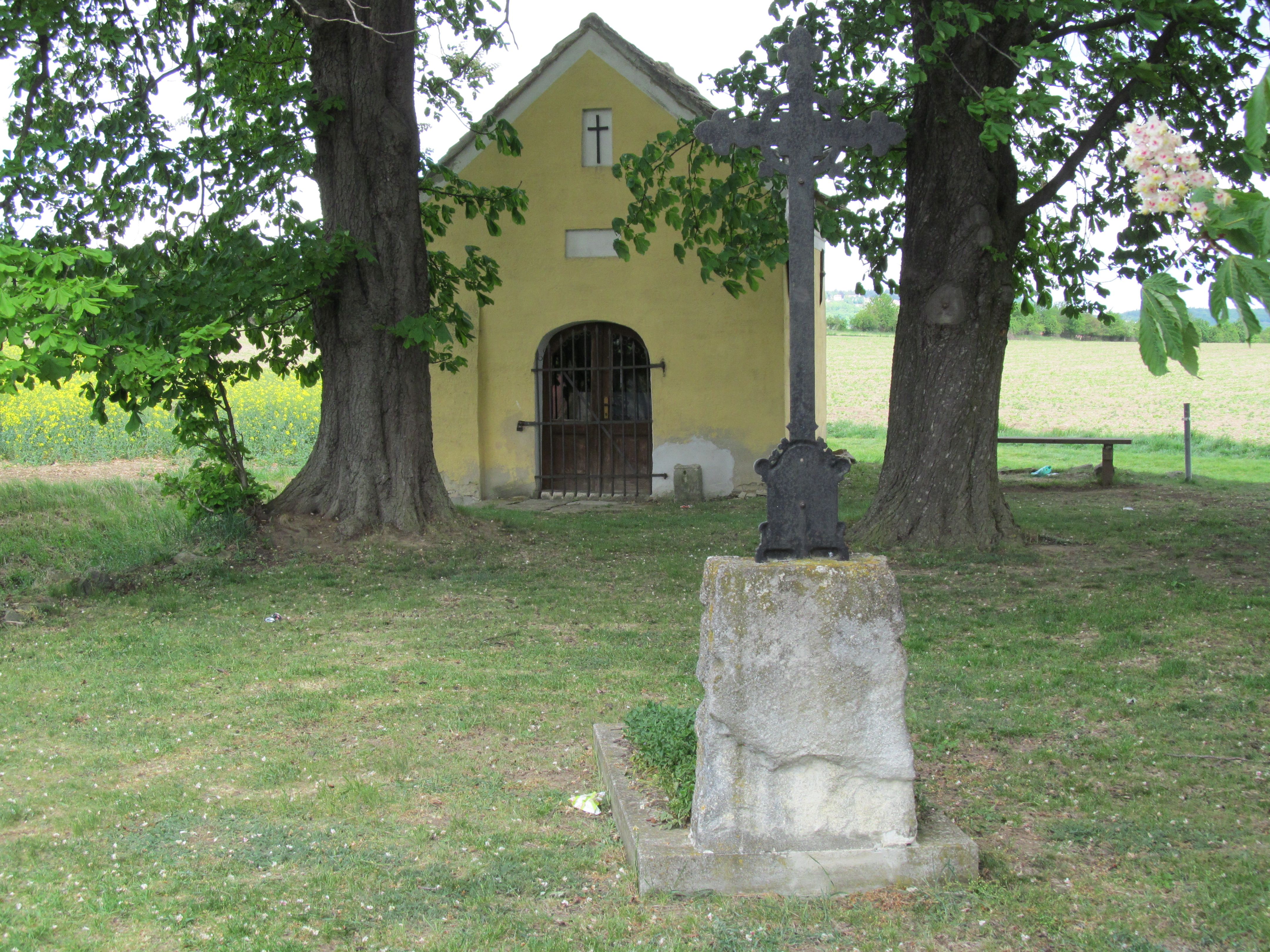
The plague chapel in Oberravelsbach was built outside the village after the devastating plague epidemic of 1679/1680. It stands on the former plague cemetery - an area measuring around 40 by 15 meters north of the village at around 292 m above sea level.
The chapel is a rectangular baroque building with a gabled roof and a striking basket arch portal. There is a simple niche with a cross on the gable end and another empty niche underneath. An old baroque wrought iron gate and a stone sacrificial altar form the entrance. The interior is flanked by two porcelain statues of the Madonna, a simple wooden altar and a tall crucifix. In addition, backdrop figures from earlier burial ceremonies have been preserved.
The two large trees on either side of the chapel date back to the time of its construction and are around 350 years old.
The plague cemetery
In front of the listed chapel is one of the few plague cemeteries in Lower Austria that is still visible today. At the back is a preserved plague grave from 1679 with a cast-iron cross and a sandstone gravestone engraved with the words: "HIR RUT BEGRABEN DIE BARBARA HAINTZELMANIN 57. ABB. ... 1679". The cemetery was not only used to bury plague victims, but also deceased unbaptized children.