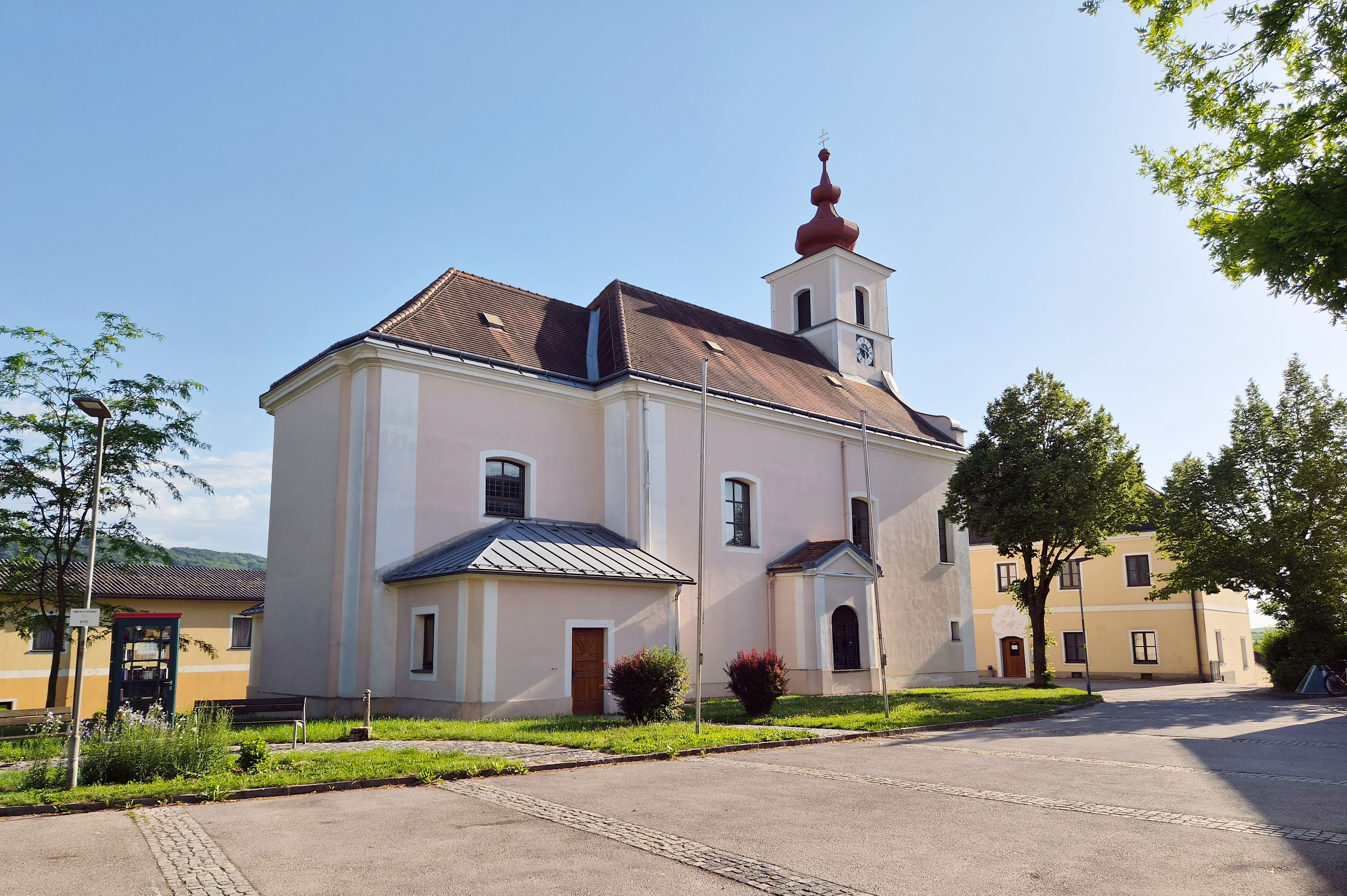
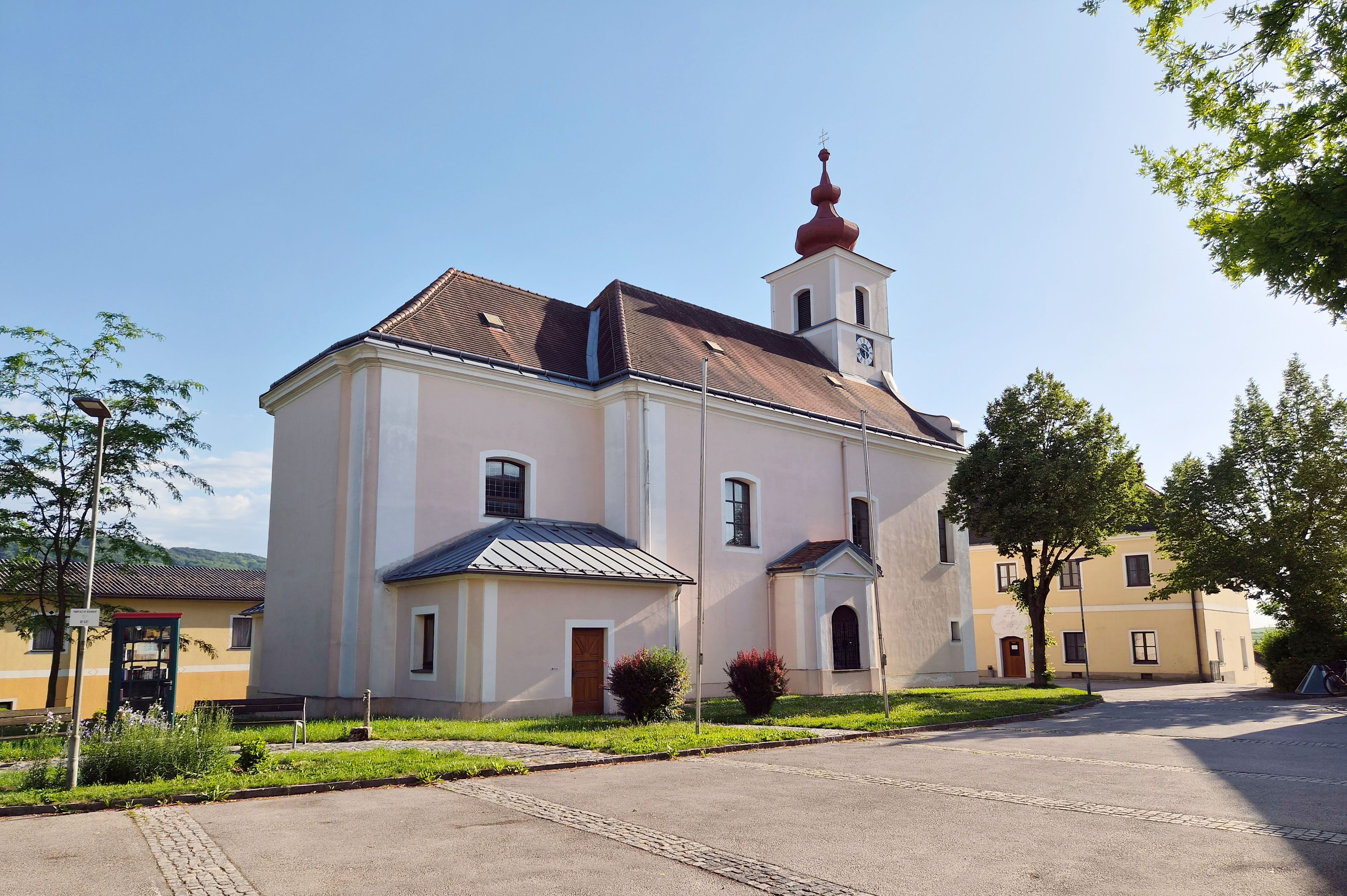
The Roman Catholic parish church in Bischofstetten stands on a hill known as the Pfaffenberg and is therefore visible from afar.
Dedicated to Saint Agatha, the church belongs to the Melk deanery in the Diocese of St. Pölten and is a designated historic monument. The church was founded by the bishops of Regensburg in the 9th century and served as a branch of the Hürm parish in the 11th and 12th centuries. The first mention of the church appears in the 12th century in the *Fürstenbuch von “Österreich und Steiermark”* by the rhyming chronicler Jans Enenkel. Much evidence points to an early medieval castle church complex. For example, the church is enclosed on the south side by a retaining wall. Remains of the Gothic church structure are visible on the south wall of the present-day church. Here, a heavily damaged Gothic jamb of a pointed-arch portal was uncovered. The tower on the west side, partially enclosed between volute flanks, is crowned with a small double-onion dome. The Baroque renovation was completed in 1746 and features rich Baroque furnishings.
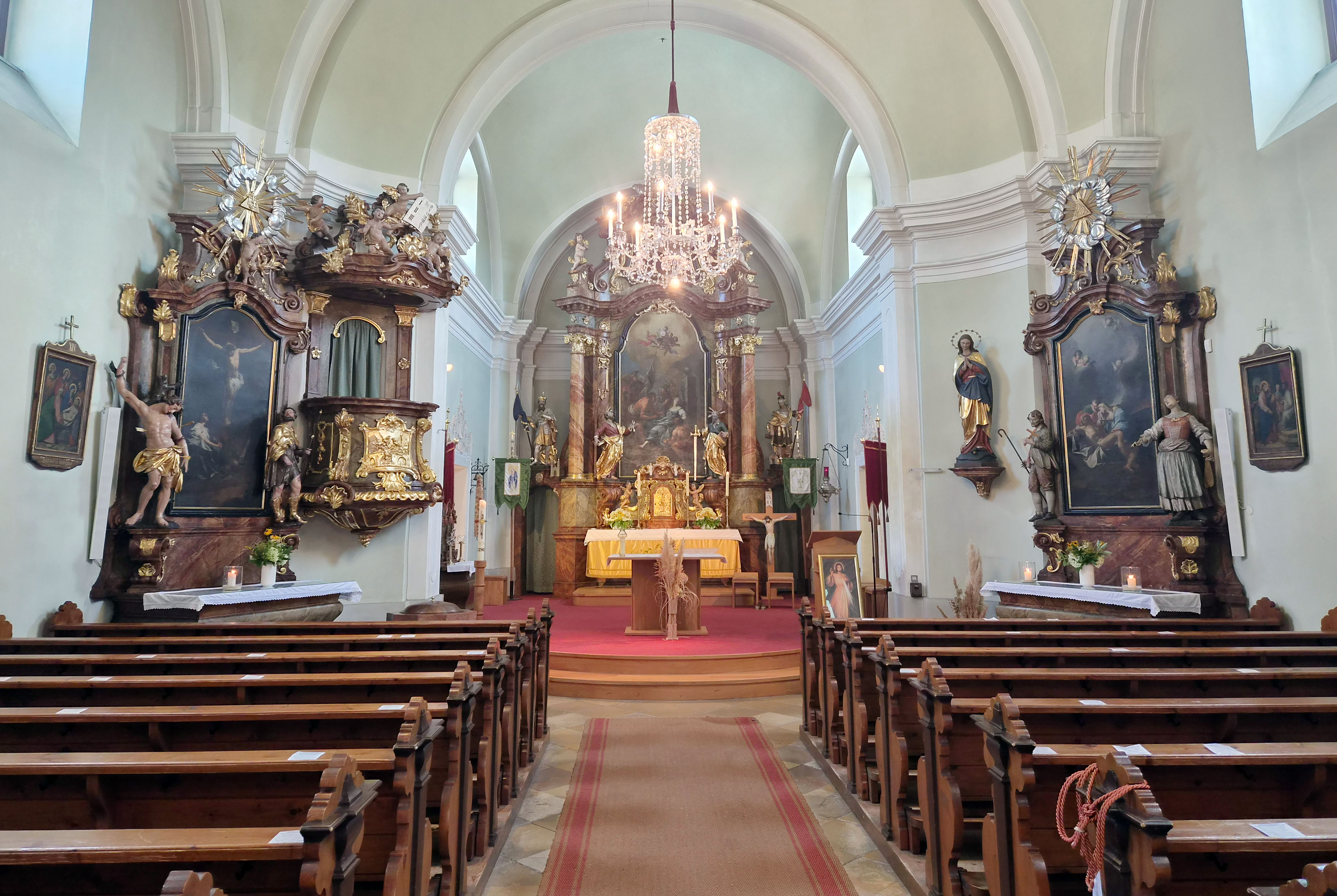
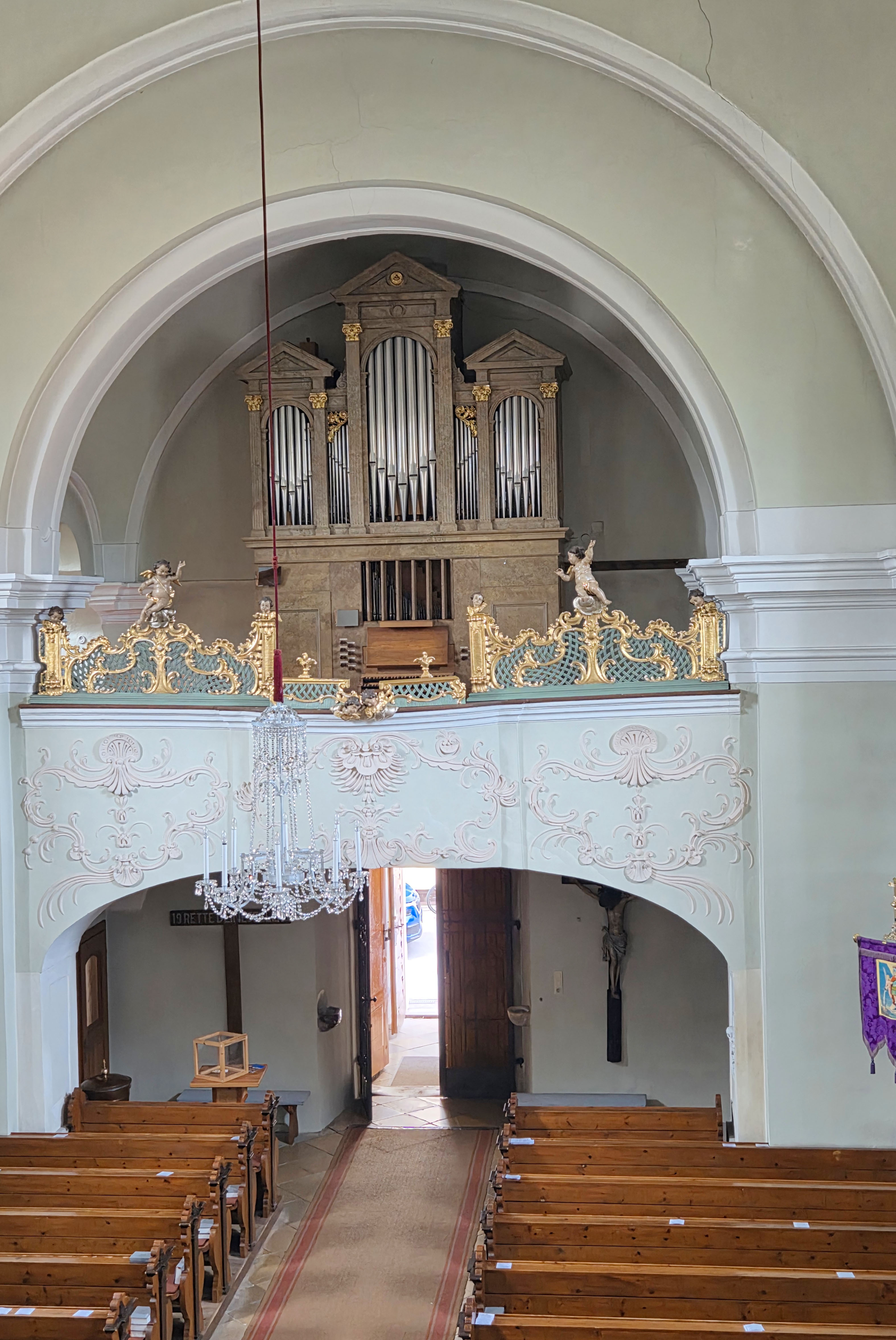
The paintings on the high altar and the two side altars are the work of Master Michelangelo Unterberger. The Tyrolean sculptor Johann Reindl created the high altar, as well as the two side altars and the pulpit. The oldest and largest bell was cast by Johann Gottlieb Jenichen (1823). The organ was built by Herbert Gollini (1980). The parish was once under the jurisdiction of the prince-elector, and the pastor was appointed directly by the imperial court.
With the establishment of the Diocese of St. Pölten, the parish came under the bishop’s authority. The rectory was given a Baroque makeover by Maria Theresa and adorned with the imperial coat of arms, which still adorns the portal today.