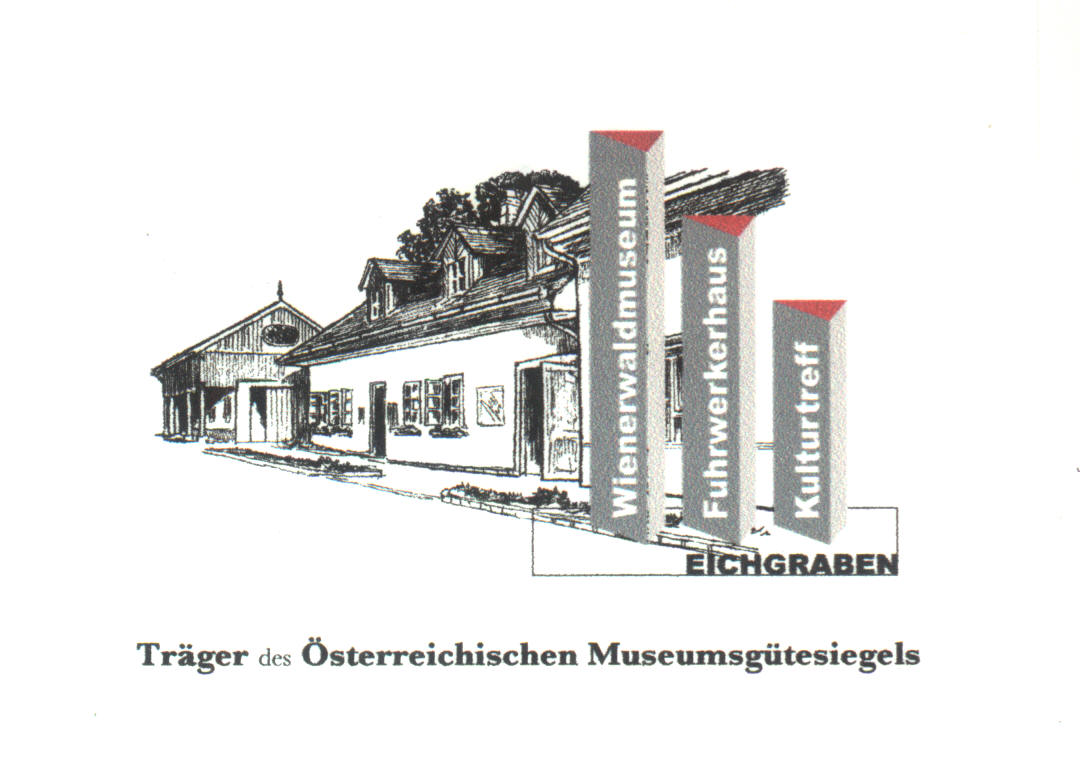
The Vienna Woods Museum in Eichgraben documents the history of the municipality of Eichgraben and its surroundings. In addition to the permanent collections, there are rotating special exhibitions.
The permanent collections at the Vienna Woods Museum in Eichgraben cover the topics of geology, archaeology, folklore, and crafts. The indoor exhibition is complemented by an open-air museum. Parents and children can also visit the “KuMst” cave, a naturalistic replica of a cave that combines scientific and artistic elements and reveals their significance.
In the geology section, children are particularly interested in experimental geology, which involves microscopes, scratch tests, hardness tests, magnetism, and more. Here, they can get hands-on and, for example, determine the hardness of minerals, gaining insightful experience on the topic through experimentation.
The archaeology collection covers prehistory and early history, beginning with the Neolithic period (mining and the first settlements in the Vienna Woods), and spans the Bronze Age, the Iron Age, and the Roman period.
The folklore collection at the local history museum traces the settlement and local history of the Eichgraben area. Starting with the first documented mention of the place name “Aichgrawe,” documents chronicle the social life of the inhabitants over the centuries. This history is multifaceted and ever-changing: the poverty of the cottagers in the 17th century, hunger and hardship during the Turkish Wars, but also prestige and prosperity during the times when Eichgraben was a popular summer resort.
At least once a month, families (for a small additional fee) can step back in time at the “Living Crafts” demonstration: potters, blacksmiths, carpenters, tailors, shoemakers, and basket weavers showcase their skills in the crafts barn. From April through the end of September, on the last Sunday of every month, experienced artisans are on hand to give hands-on demonstrations of their respective trades using traditional tools. Children are also allowed to try using the tools themselves to get a vivid sense of what it’s like to practice a craft.
Our book treasure trove is also open on these days.
The open-air museum displays agricultural equipment, explains the once-arduous work of the grain harvest, and exhibits various tools used for winter work. The outdoor grounds also feature a charcoal kiln and a Roman grave from the archaeological collection.
Finally, the “KuMst” Cave—a naturalistic reconstruction of a Vienna Woods cave—offers artistic and scientific insights. On the one hand, it conveys the significance of caves as dwellings, places of refuge, hunting posts, places of worship, and burial sites for prehistoric humans; on the other hand, it focuses on experiencing the spatial atmosphere of a cave and perceiving its nature with all the senses.
Guided tours are available by appointment.