

Stone and Time themed circular route no. 68 - Pöggstall - Loibersdorf
Use our AI guide
Do you have any questions about your stay?

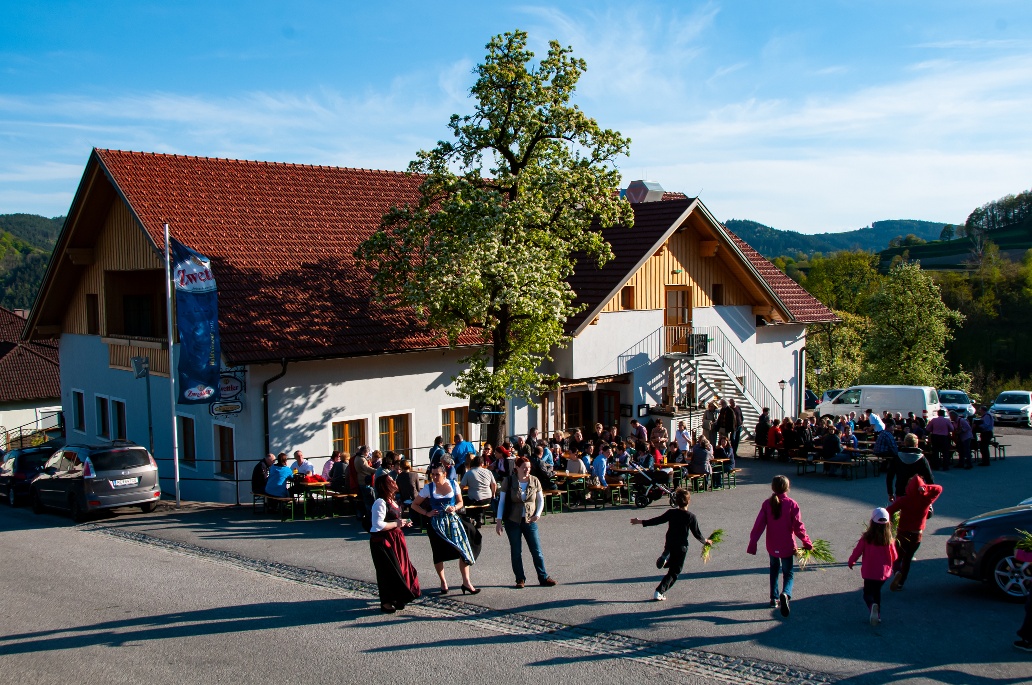
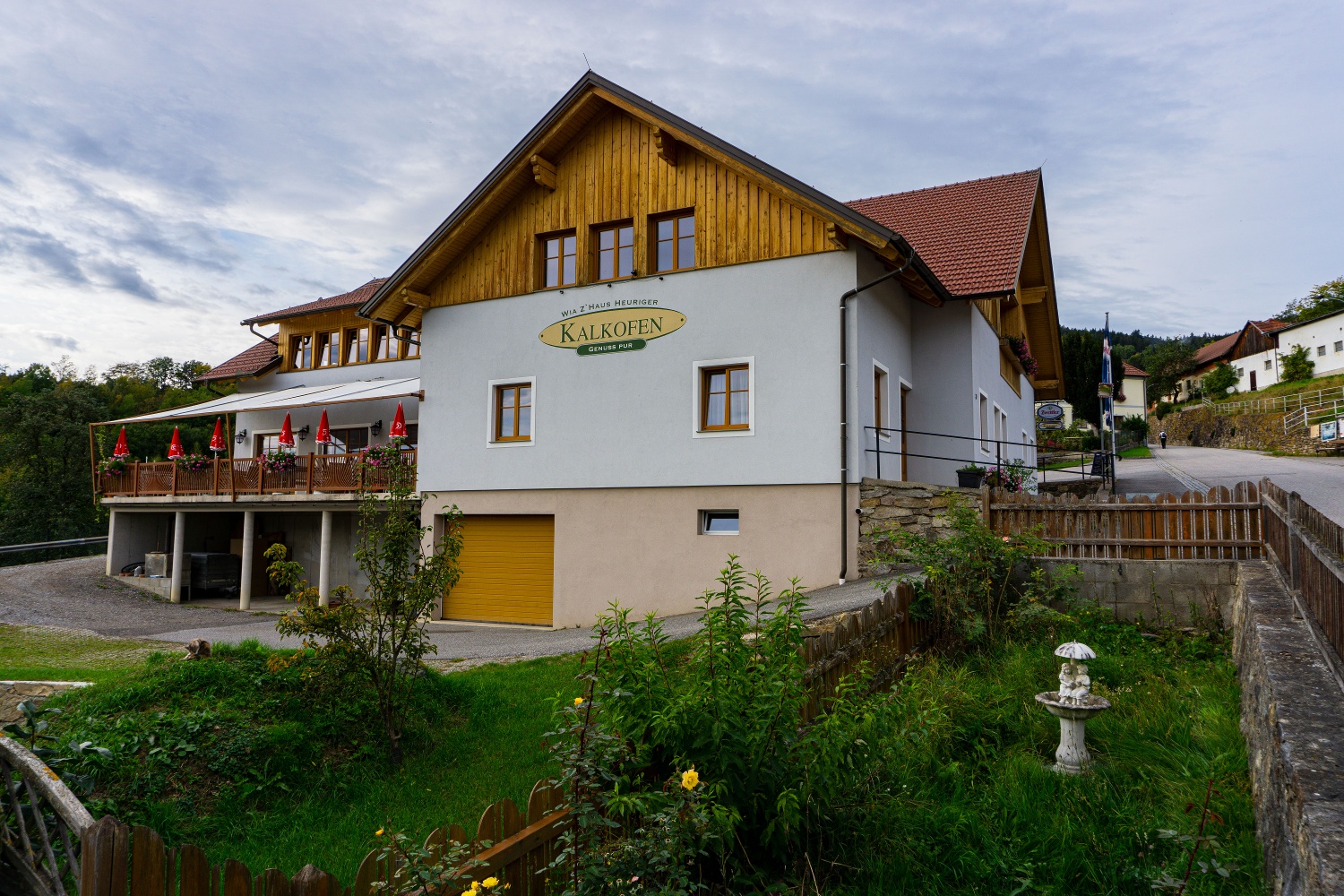
Hiking tour Starting from Schmankerl Wia z´Haus Kalkofen, Höllmüller family, Loibersdorf 2
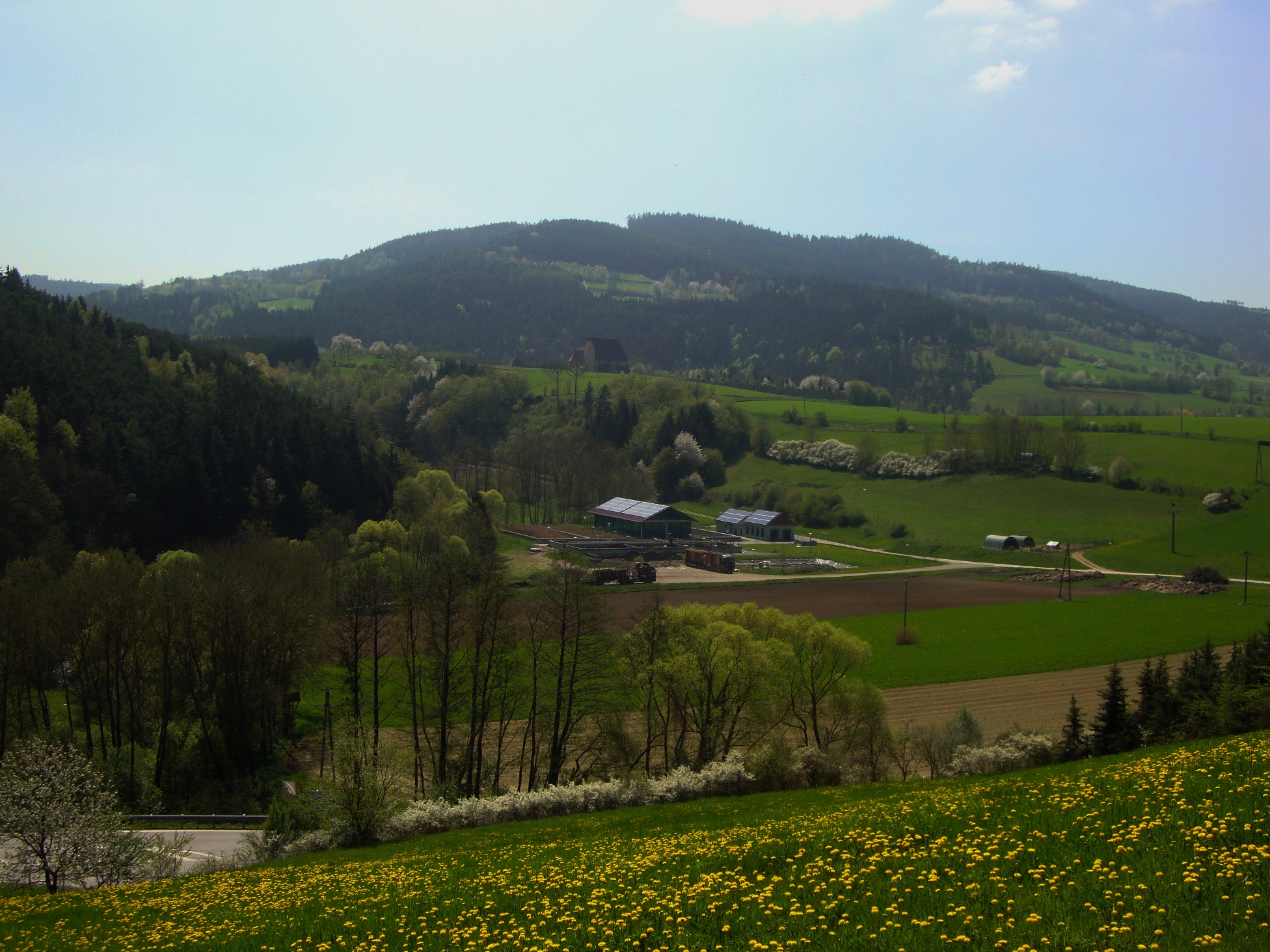
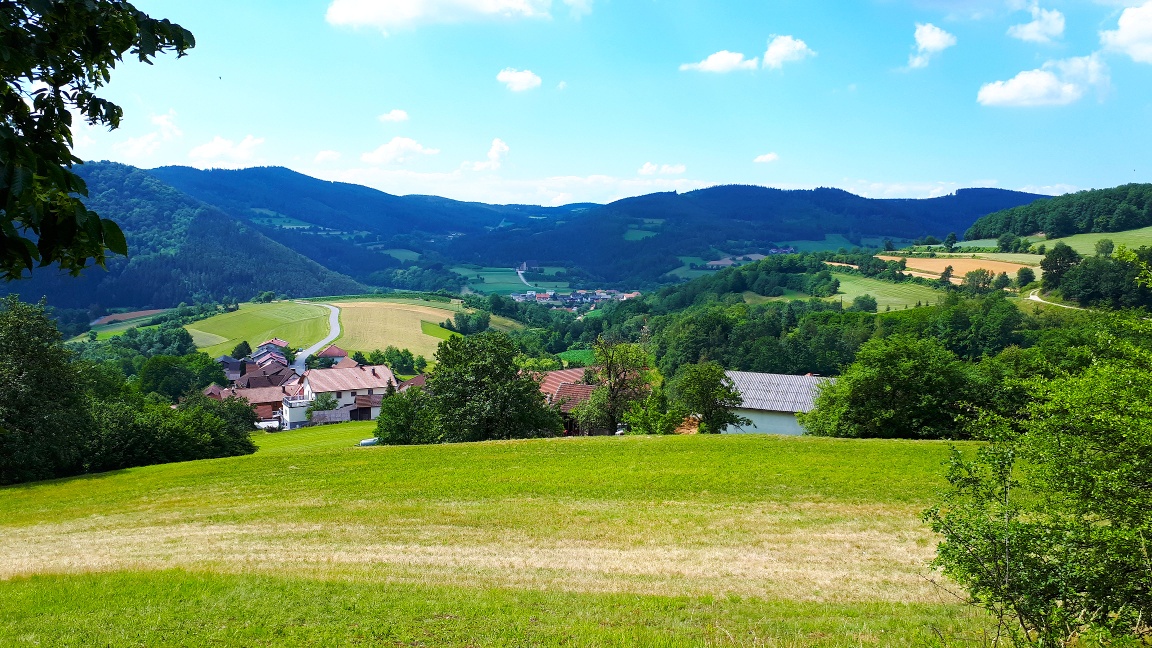
From the edge of the Danube to Steinmethusalem, on the geological traces of our homeland. This hike is particularly recommended for families with children who like to go on a journey of discovery. You can learn lots of interesting facts about the various rocks and the lime kiln.
From the edge of the Danube to Steinmethusalem, on the geological traces of our homeland. This hike is particularly recommended for families with children who like to go on a journey of discovery. You can learn lots of interesting facts about the various rocks and the lime kiln.
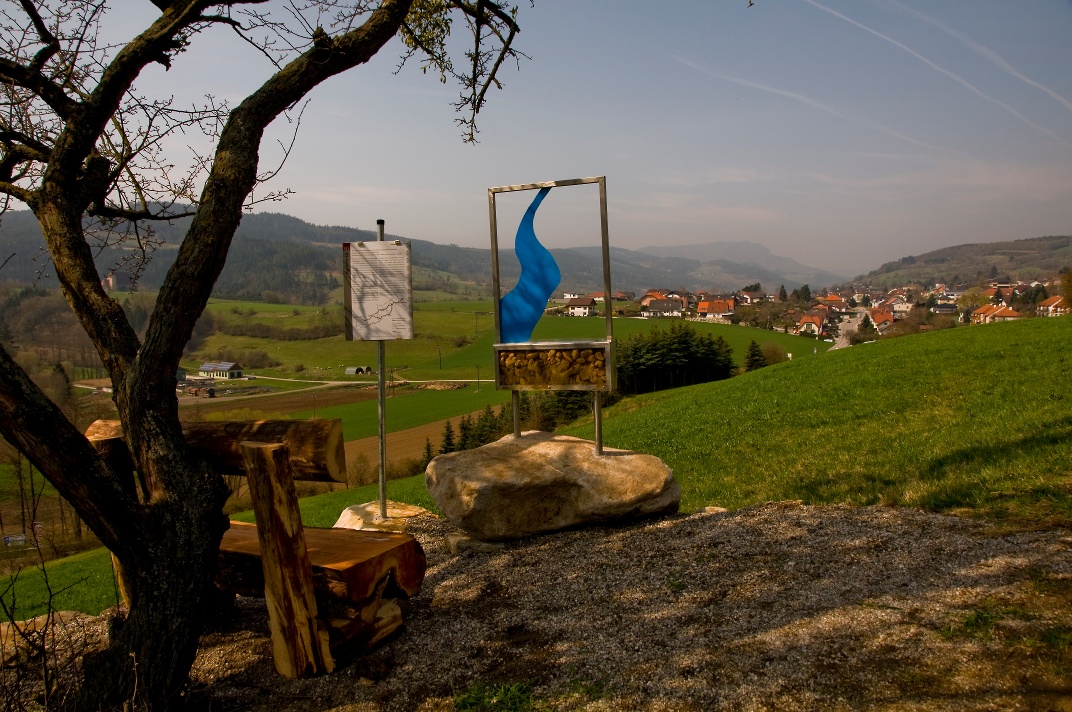
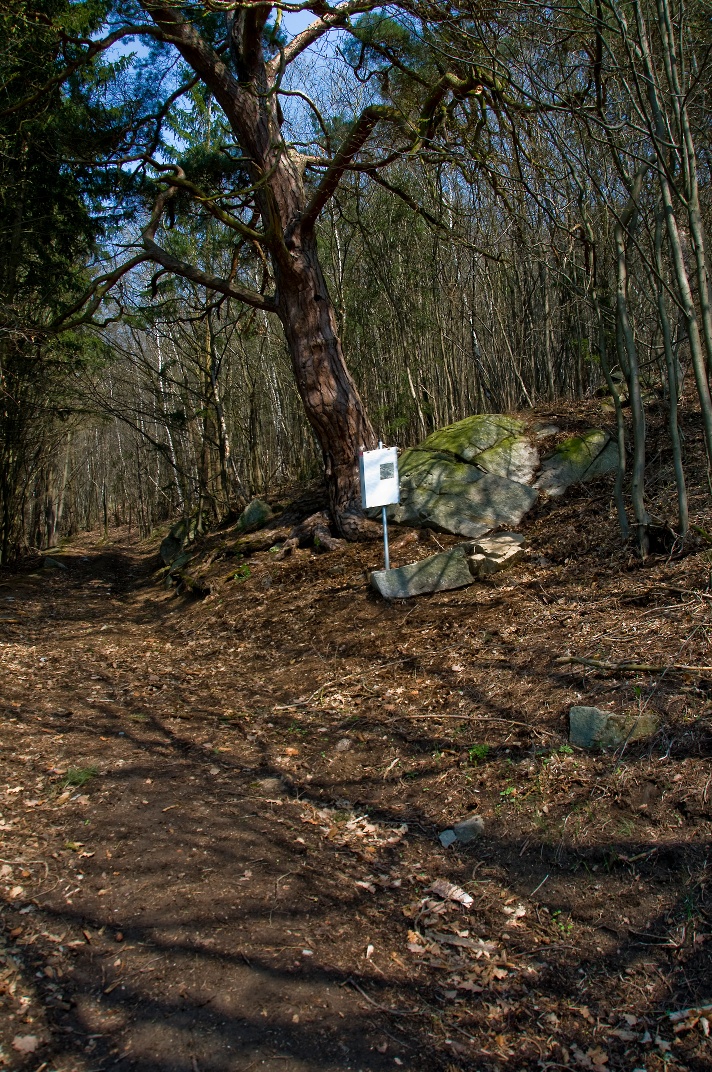
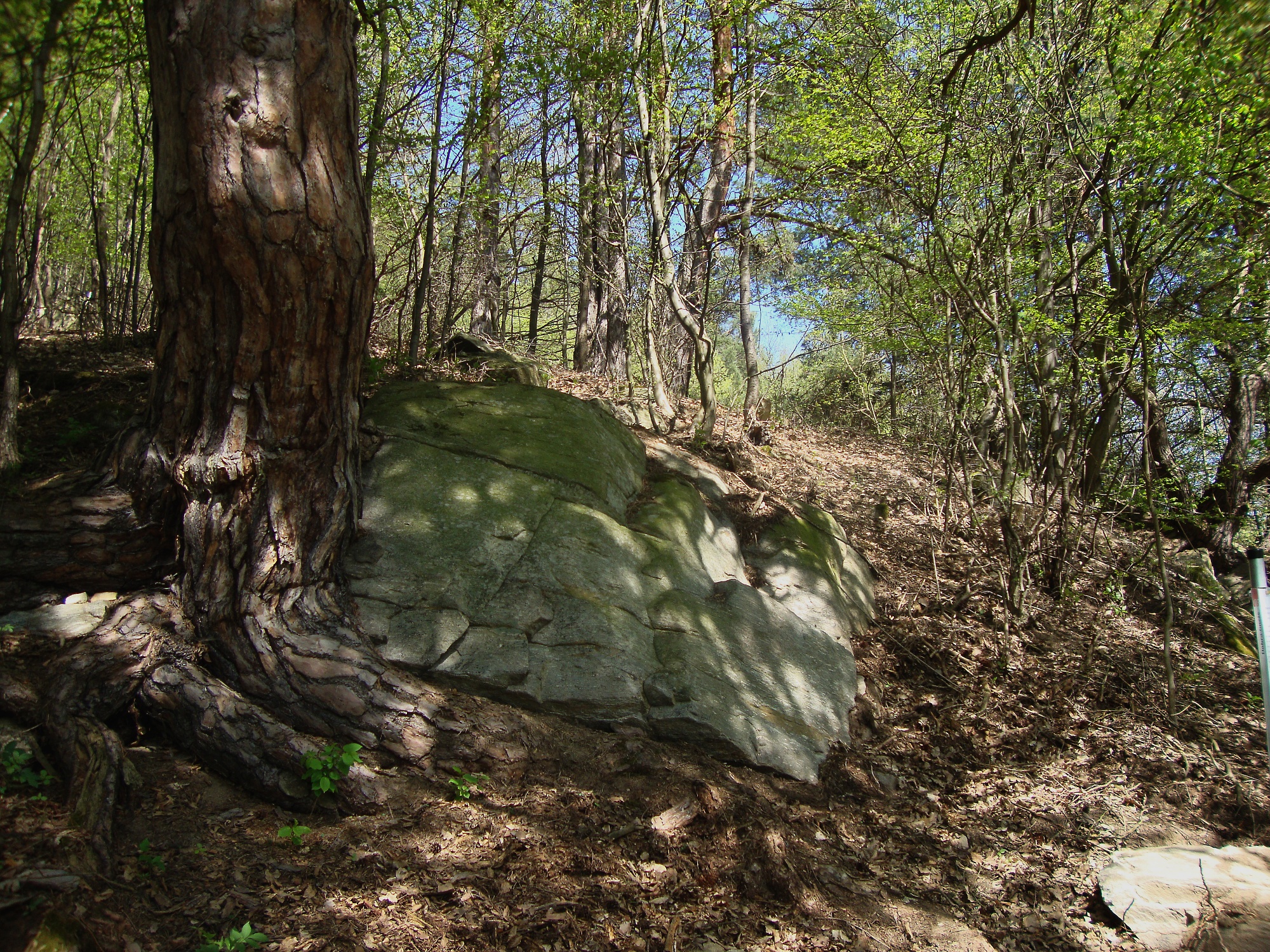
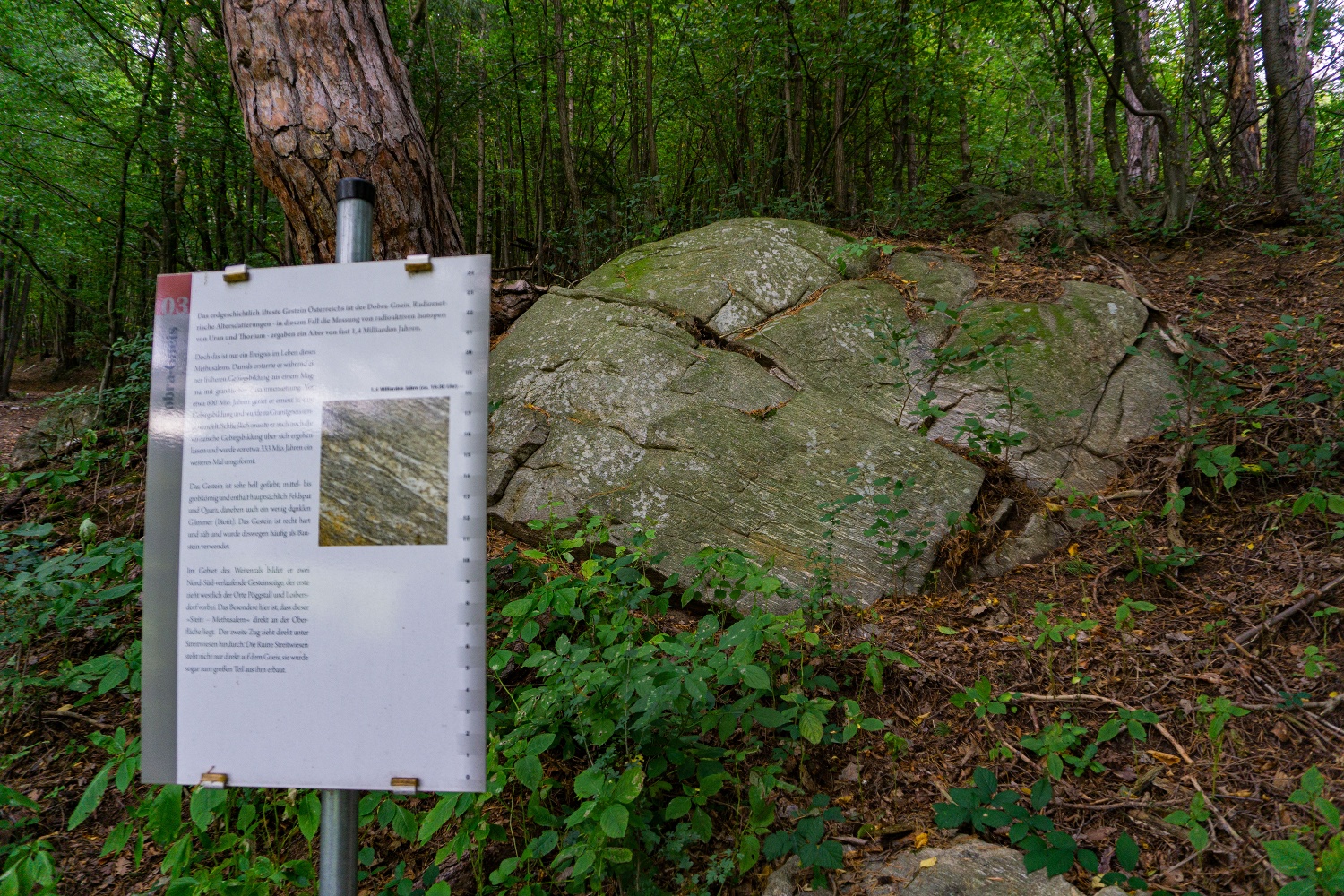
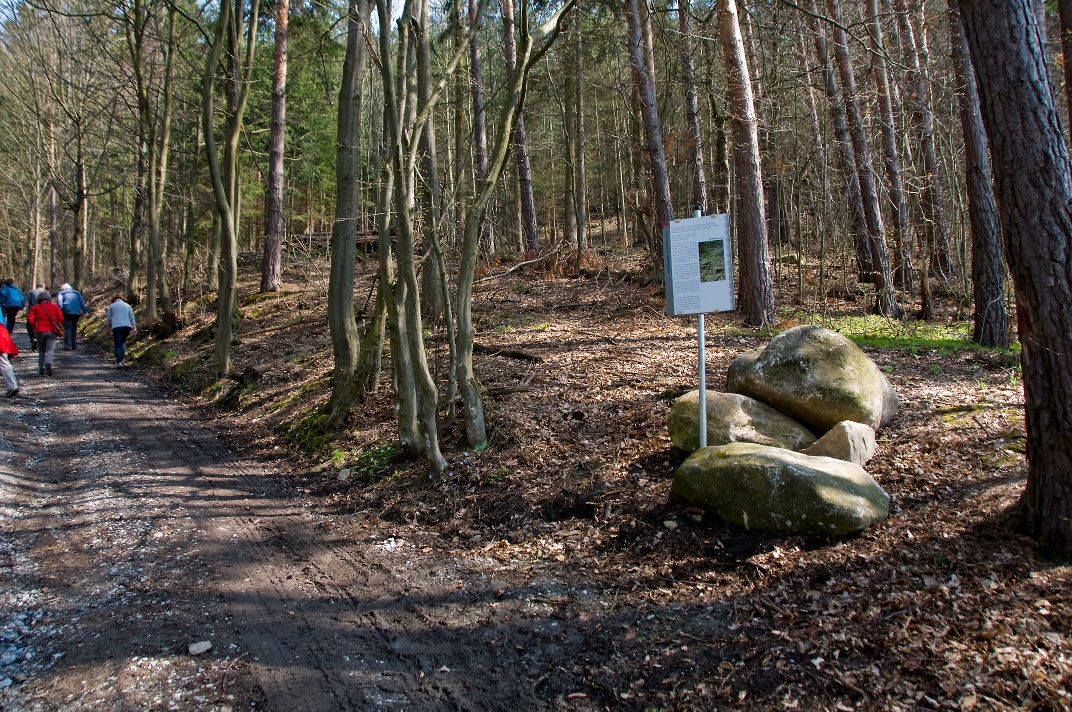
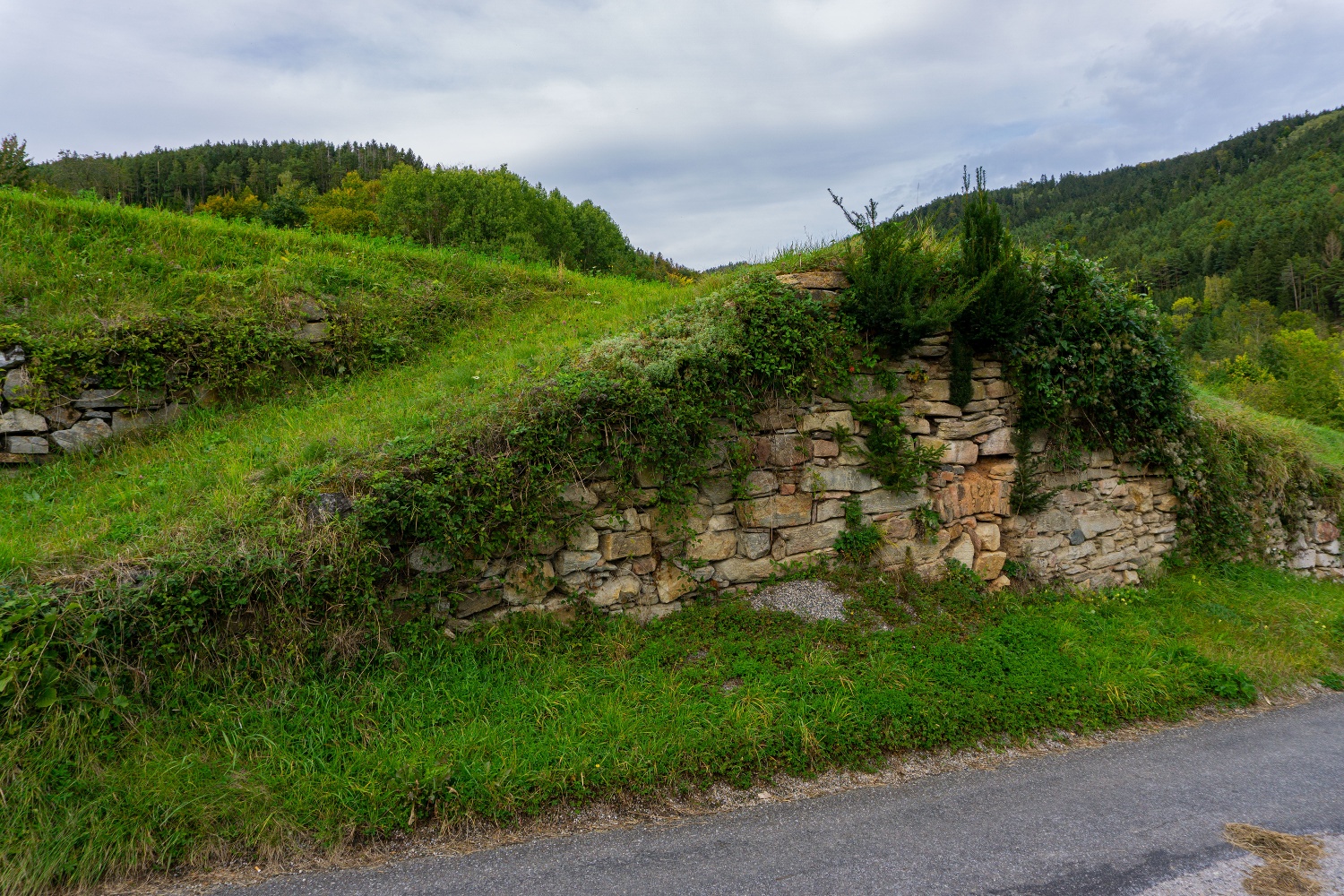
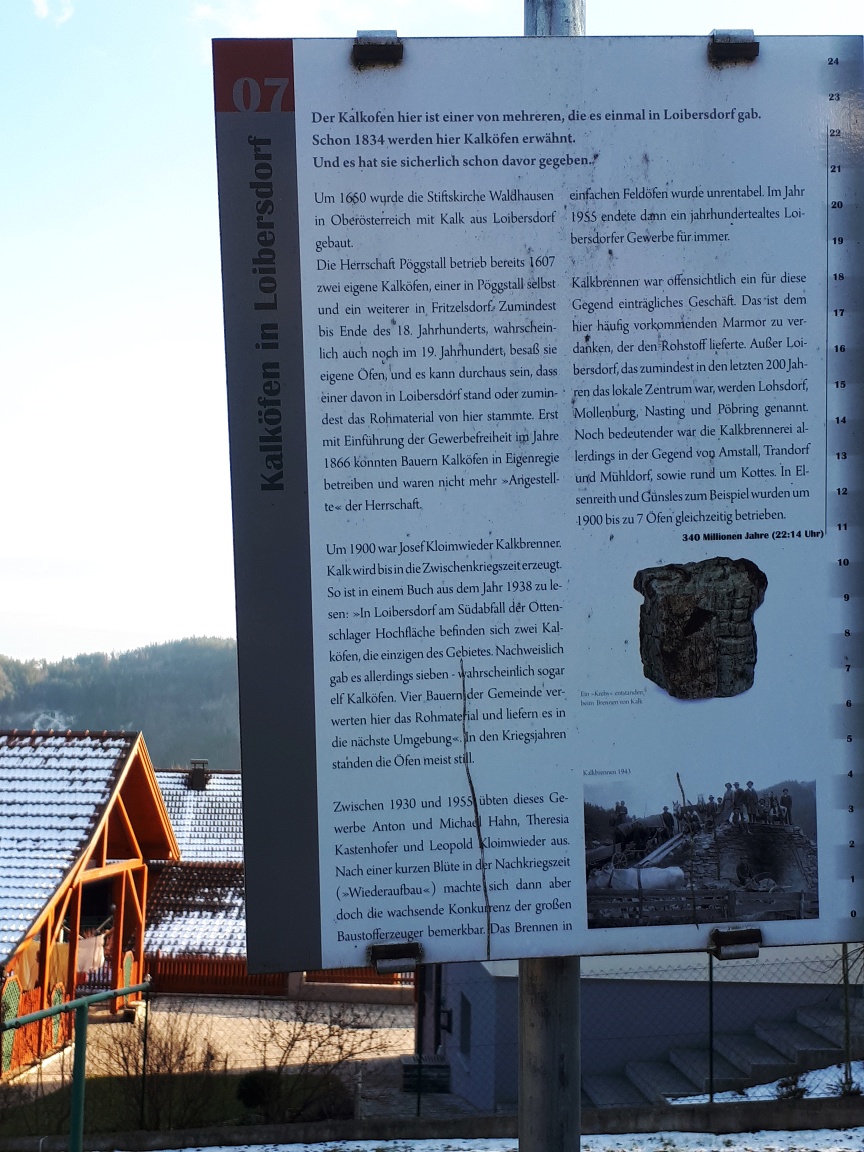
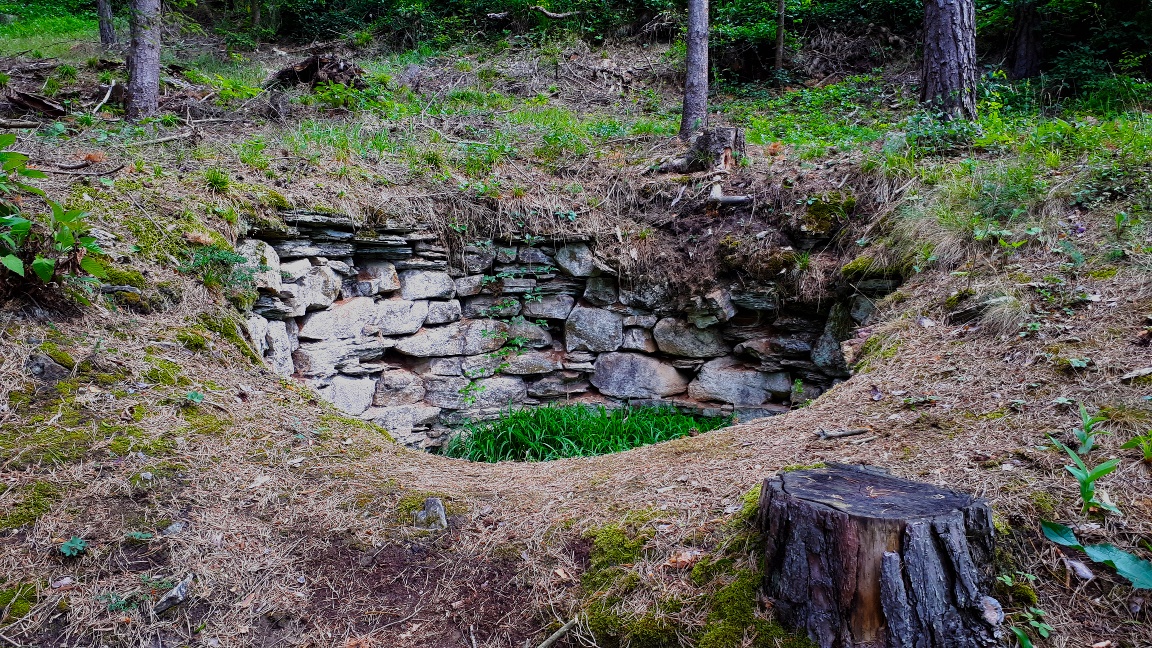
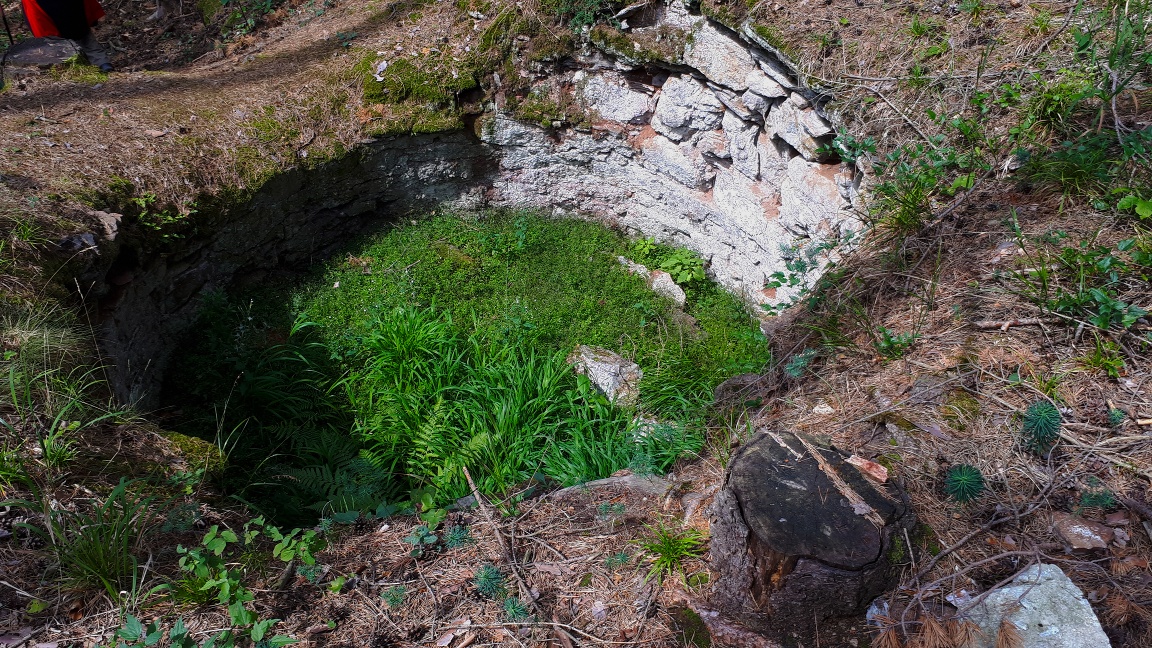
The geological theme trail consists of 2 loops, both of which start from the Höllmüller inn. The first loop heading south takes you to 7 stations. Each station has an interesting information board with interesting facts about the stone formations found. At station 3 you will discover an impressive Methuselah stone. Would you have known how a lime kiln works? At station 7 you will come to the remains of a lime kiln. In the Waldviertel, the raw material required for firing was not lime, but marble, a metamorphic limestone that is also suitable for firing. However, the pieces of marble were not simply tipped into the kiln, but had to be stacked according to a stacking order so that the load did not collapse during firing and the right draught ensured the necessary temperature and an even firing process. Most kilns were designed so that they could be loaded from the front as well as from above. Depending on the weather, a lime kiln was fired for the first time in mid to late March and the last time around All Saints' Day. It took half a day to fill the kiln with up to 10 tons of prepared stones. Depending on the quality of the marble and firewood, the subsequent firing lasted up to 60 hours, but at least two days and nights. The fire was never allowed to go out during this time and logs had to be constantly added. On the second loop of the themed trail, there are another 4 stations and lime kilns that were located in the middle of the forest.
Worth seeing:
Pöggstall Castle - which hosted the Lower Austrian provincial exhibition "Alles was Recht ist" in 2017 - is home to a museum about the history of law, including the only "original" torture chamber and a documentation about the life and work of artist Franz Traunfellner. The special exhibition "Pöggstall Castle - between the region and the imperial court" in the barbican is just as exciting and tells of the eventful restoration, significant finds and amazing stories about the lords of the castle. A 3D animation vividly shows how the keep and the later castle grew from its original structure to its present form.
In addition to Pöggstall Castle with its barbican (traffic circle), the very old St. Anna Church in the field (1140), the parish church of Pöggstall and the pilgrimage church in Neukirchen (1118) on the Ostrong, which is older than Maria Taferl as a pilgrimage church, are also worth a visit.
Leisure tips:
4 tennis courts, beach volleyball court, soccer pitch, a covered multi-sports facility, children's playgrounds, campsite, mountain bike and cycle routes, fishing and riding opportunities, Laas horse farm, Texas Longhorn Austria, Hotglass Atelier Faffelberger, Kräuterhof Schrammel, Josef Mitmasser brand painting.
Make sure when choosing the route that it matches your fitness level. Check whether the gastronomy businesses you want to visit along the way are open. Pack your mobile phone and map material in your backpack.
Sturdy footwear is sufficient, optionally functional clothing, sun and rain protection, map material, possibly telescopic poles, first aid kit (blister plasters), provision (snack, muesli bar, fruit, water)
For winter hikes, we recommend a thermos with warm drinks, warm functional clothing, headgear as well as gloves, pocket or headlamp.
At Schmankerl Wia z 'Haus Kalkofen, first walk down the street to the right towards Gerersdorf. With the beautiful view of St. Anna Church, you reach Station 1 former Danube valley, shortly after you come to Station 2 brick kiln. Continuing on the road to Gerersdorf, take the left turn to Station 3 Methuselah stone. From here, you go back 40 meters on the path and continue to the right to Station 4 granite veins.
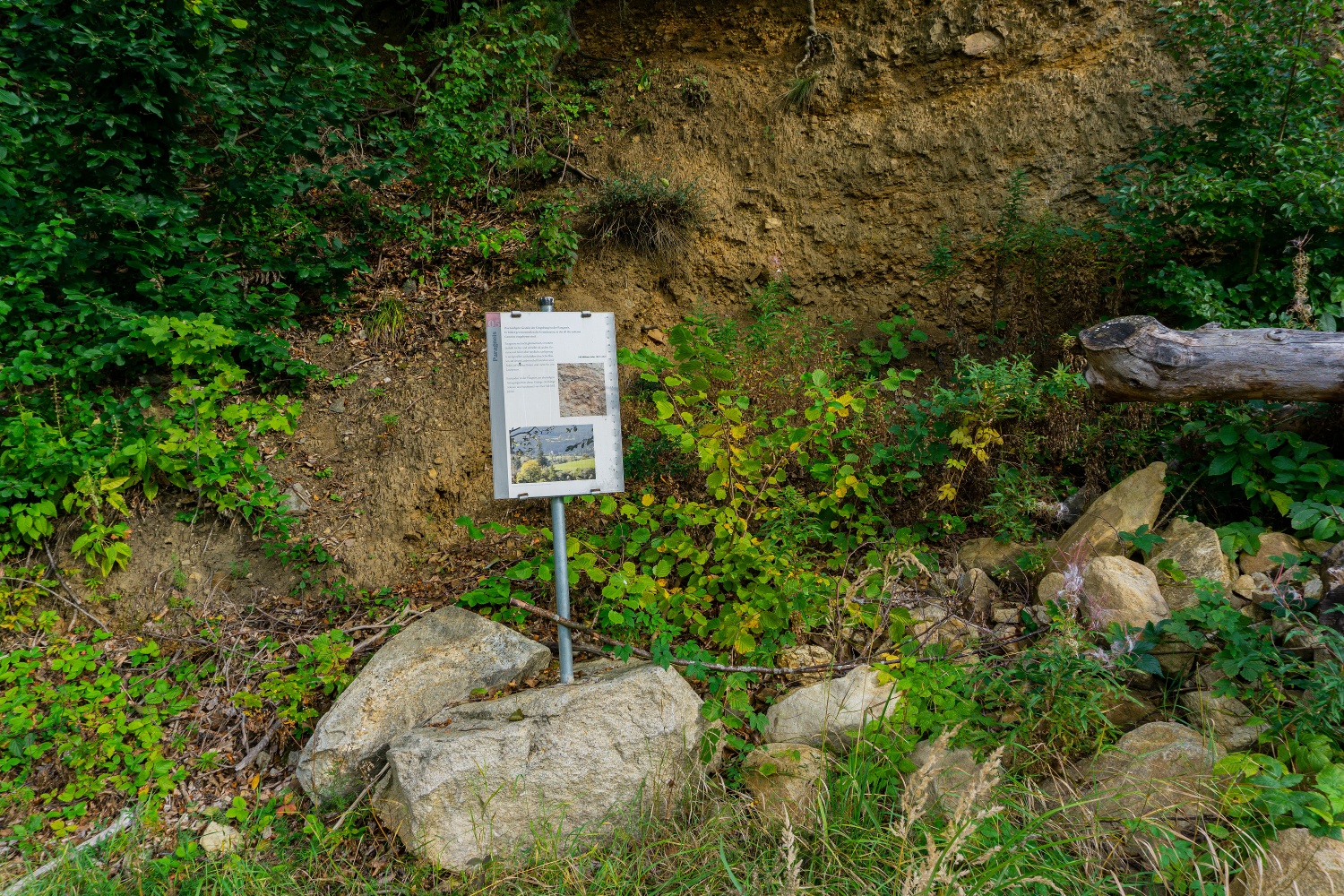
Now the path leads a bit through the forest uphill to Stations 5 paragneiss and 6 graphite, both located slightly off the route (about 40 meters). After you return from the detour, you walk along the road to Station 7 former lime kiln. Now you pass the remains of a lime kiln.
Soon you will have completed half of the double loop and are back at the starting point at the guesthouse. You have now completed the first, southern loop of the themed trail and set out refreshed for the second stage. For the second part of the route, go about 10 meters to the left from the start board and then up the steep asphalt path to the right. Soon this turns into a gently ascending forest path. At Station 8 marble quarry - rock fold, turn left up the path. After a short flat section, it goes moderately steeply up to the right on the "Raingasse" (former transport route of the burnt lime) to Station 9 marble extraction pit.
Returning along the side path, follow the path to Station 10 Kastenhofer lime kiln. Continuing on the forest path, you reach the highest point of the route (675 m above sea level) at Schmidkreuz and then turn left onto the road to Station 11 leukocratic orthogneiss. Here, with suitable visibility, you have a view of the Styrian-Lower Austrian limestone Alps (Schneeberg, Rax, Ötscher up to the Gesäuse). Continuing along the road, you can decide in Bergern whether to go left back to the starting point Schmankerl Wia'z Haus Kalkofen or right over the path "Old Post Road" to Pöggstall.
Free parking at Schmankerl Wia z´Haus Kalkofen
From Vienna via the A1 to the Melk exit - Melk Danube bridge - B3 towards Weitenegg, on L216 until shortly before Pöggstall, then turn right to Loibersdorf
From Linz – A1 to Ybbs/Donau exit, Ybbs Danube bridge, B36 to Würnsdorf near Pöggstall or via the A1 Pöchlarn exit, L7247, L7266 to Pöggstall and Loibersdorf
Pöggstall is accessible by regional bus from Zwettl and from the train stations Melk, Pöchlarn, Ybbs/Donau, Krems, and St. Pölten (except Saturdays, Sundays and holidays). Your exact route can be planned with the VOR route planner. www.vor.at
The Methuselah stone at Station 3 is very impressive and the stop at the guesthouse Höllmüller is recommended.
Responsible for the content of this tour
Waldviertel Tourism
Last updated: 31.01.2023
Market municipality Pöggstall
Meran of the Waldviertel
3650 Pöggstall, Hauptplatz 1
(T) +43 2758 2383
(E) gemeinde@poeggstall.at
(I) www.poeggstall.at
Waldviertel Tourism
3910 Zwettl, Sparkassenplatz 1/2/2
(T) +43 2822 54109
(E) info@waldviertel.at
(I) www.waldviertel.at
Pöggstall Castle
Museum cashier - open from Tuesday to Sunday
3650 Pöggstall, Hauptplatz 1
(T) +43 2758 2383-25 or +43 680 3325747
(E) schloss@poeggstall.at
Taxi Hader, Pöggstall
(T) +43 2758 3300
Letzte Änderung: 16 Mar 2026