
Wachau World Heritage Trail 02: Dürnstein-Weißenkirchen
Use our AI guide
Do you have any questions about your stay?

Hiking tour Starting from Dürnstein, old town
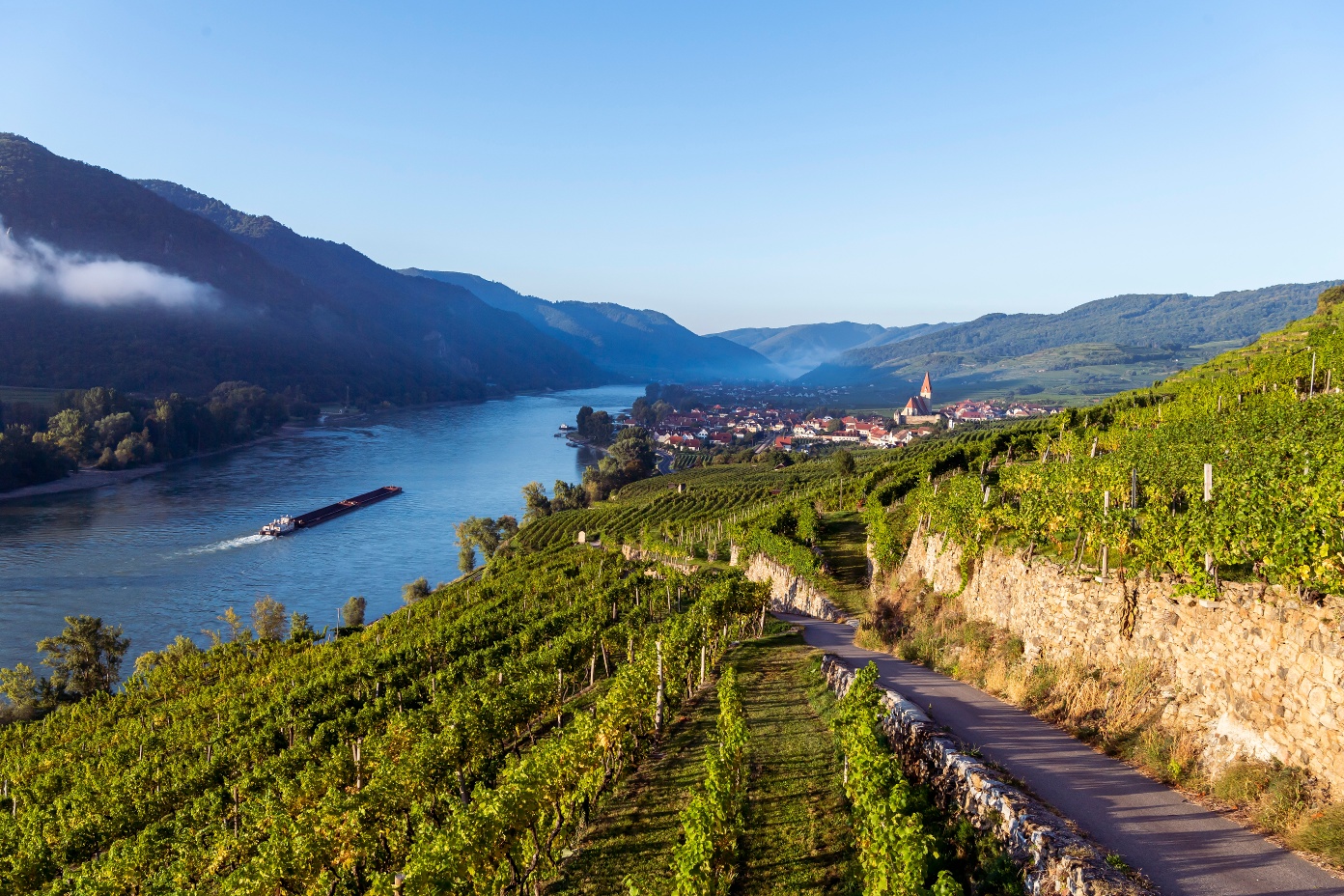
On the almost 17 km long hike from Dürnstein to Weißenkirchen, Austria's most famous castle ruins, fantastic views and famous stone terrace vineyards such as Klaus and Achleiten await us.
On the almost 17 km long hike from Dürnstein to Weißenkirchen, Austria's most famous castle ruins, fantastic views and famous stone terrace vineyards such as Klaus and Achleiten await us.
Welterbesteig Wachau - Wachau World Heritage Trail: From Dürnstein to Weißenkirchen
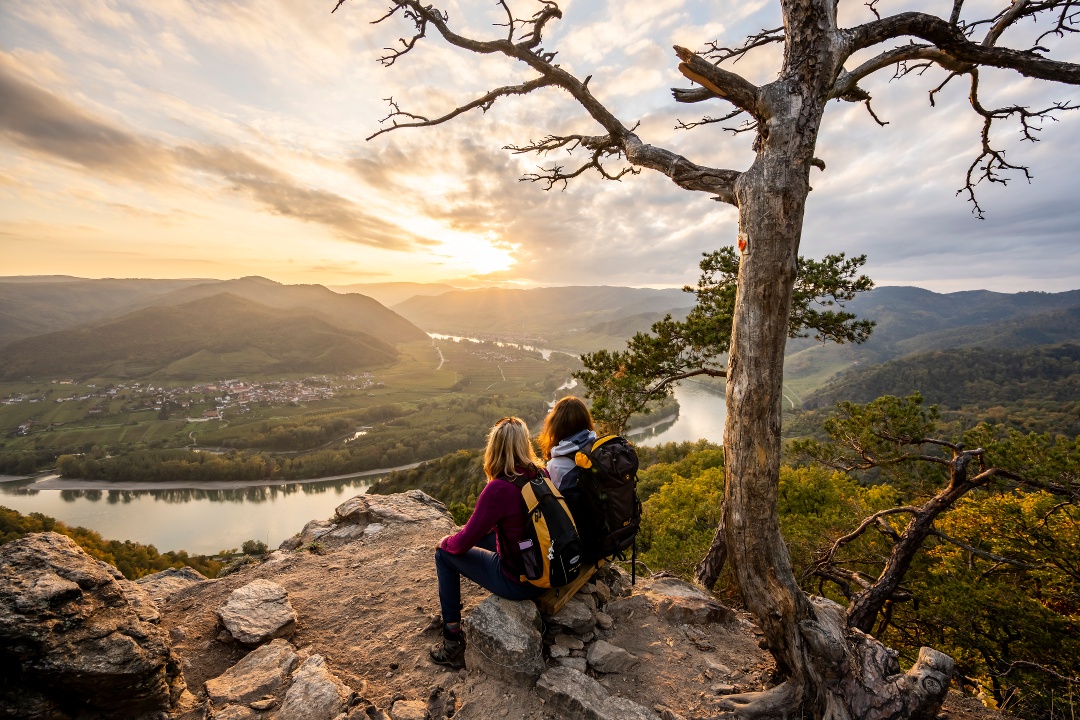
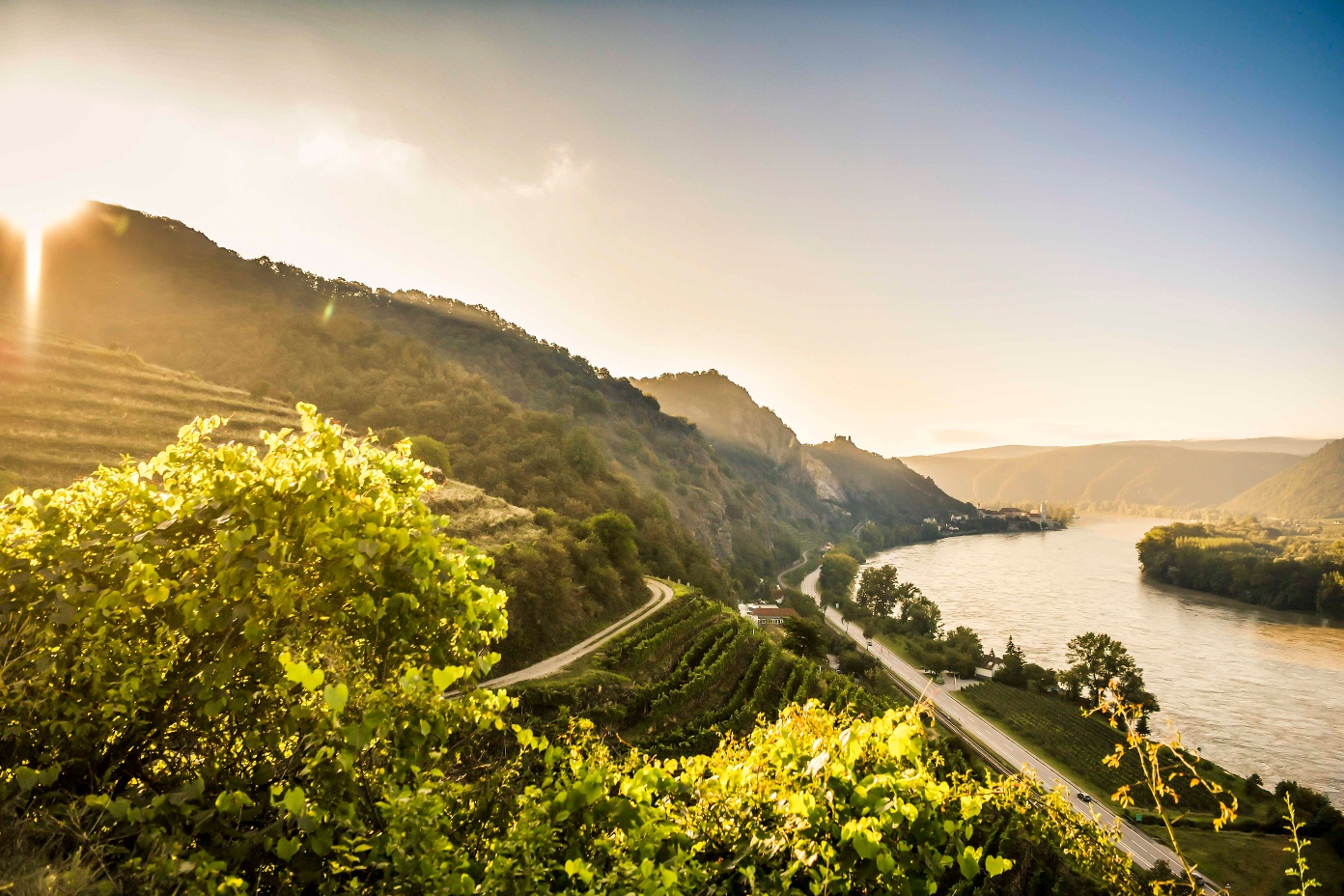
The stage from Dürnstein to Weißenkirchen is one of the most scenic sections of the Welterbesteig Wachau - Wachau World Heritage Trail and combines striking cultural monuments with impressive natural areas. From Dürnstein, the trail leads up to the well-known Dürnstein castle ruins, one of Austria's most important landmarks. In a varied forest and rocky landscape, the route continues past the Starhembergwarte and the Fesslhütte to the Kanzel, one of the most beautiful vantage points in the Wachau with sweeping views over the Danube valley.
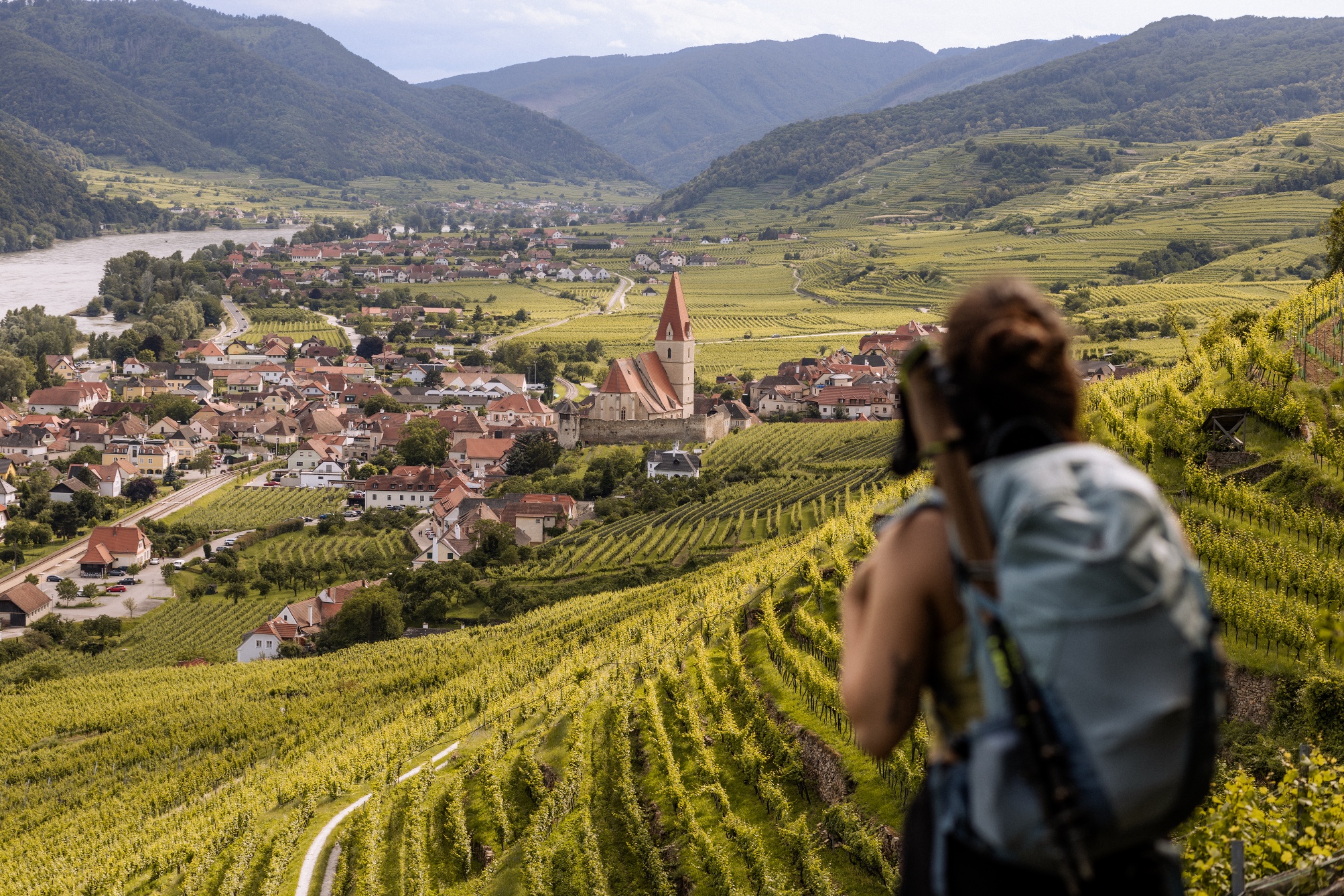
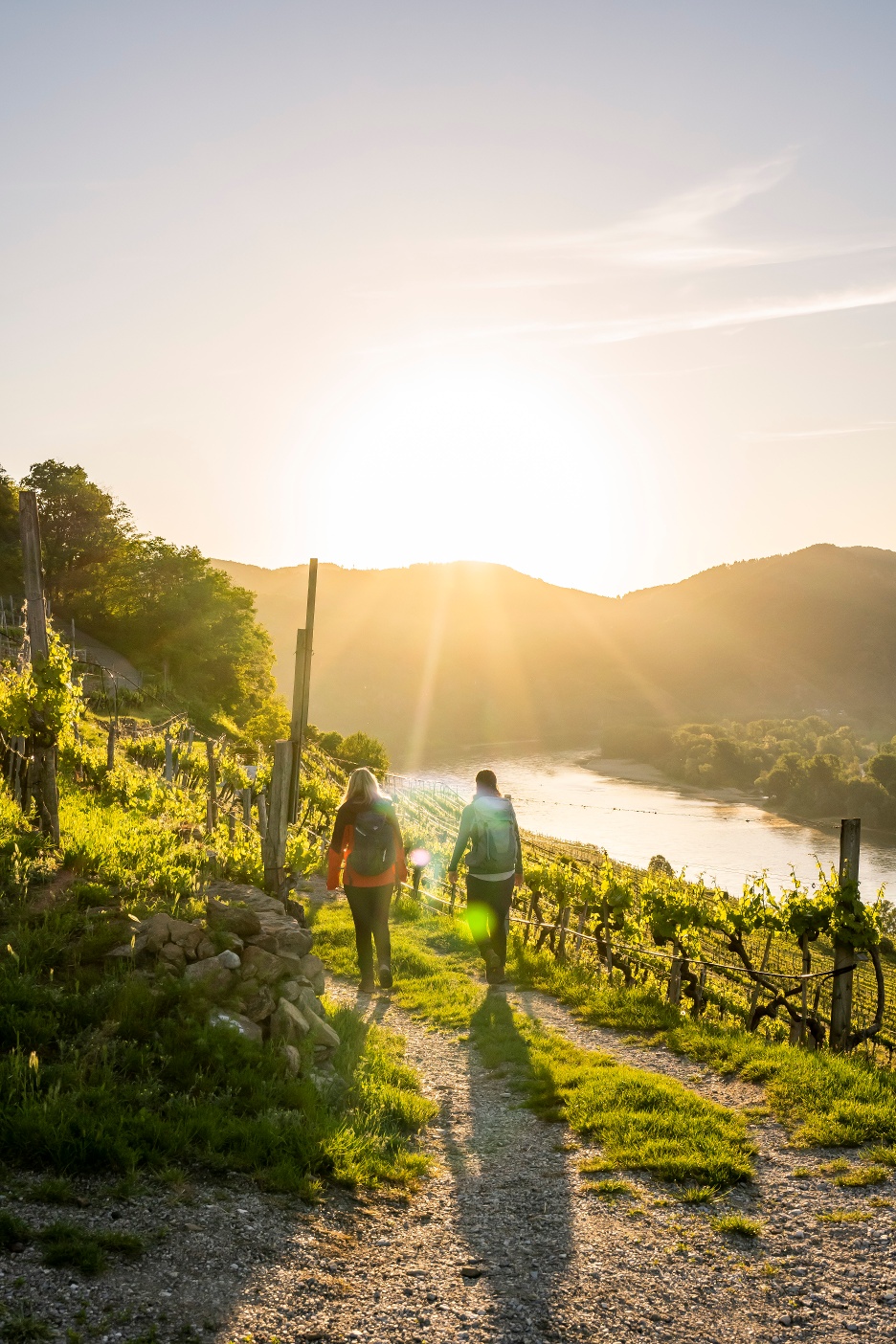
Opposite on the north side of the Danube is the Pritzenau, a special nature reserve with a revitalized oxbow lake that impressively reflects the ecological diversity of the river landscape. The route continues through picturesque vineyards and renowned vineyards such as Achleiten and Klaus, always accompanied by impressive views of the Danube. The end of the stage is the traditional winegrowing village of Weißenkirchen, whose striking fortified church dominates the townscape and forms a worthy conclusion to this hike rich in culture and scenery.
Hiking along the Welterbesteig Wachau - Wachau World Heritage Trail reveals step by step why the Wachau has been designated a UNESCO World Heritage region. Along finely curated World Heritage spots, the defining World Heritage highlights become visible - the interplay of historic cultural landscape, traditional viticulture, extraordinary natural spaces and the Danube as a shaping element.
For a carefree all-round offer, including luggage transport, tastings and transfer services, we recommend booking one of the versatile hiking packages.
Thanks to good rail connections, a relaxed and sustainable journey to the Wachau is easy. A dense network of public transport in the region ensures that all stages can be easily reached by bus, train, ferry and boat. This also makes it very easy to combine different stages.
The Welterbesteig Wachau - Wachau World Heritage Trail has also been awarded the Austrian Hiking Seal of Quality. This certification stands for high quality standards in terms of route guidance, signposting, safety and infrastructure and confirms the World Heritage Trail as a reliable and high-quality hiking offer in the heart of the UNESCO World Heritage Site.
The Starhemberg lookout is closed until further notice.
Emergency mountain rescue Wachau: 140
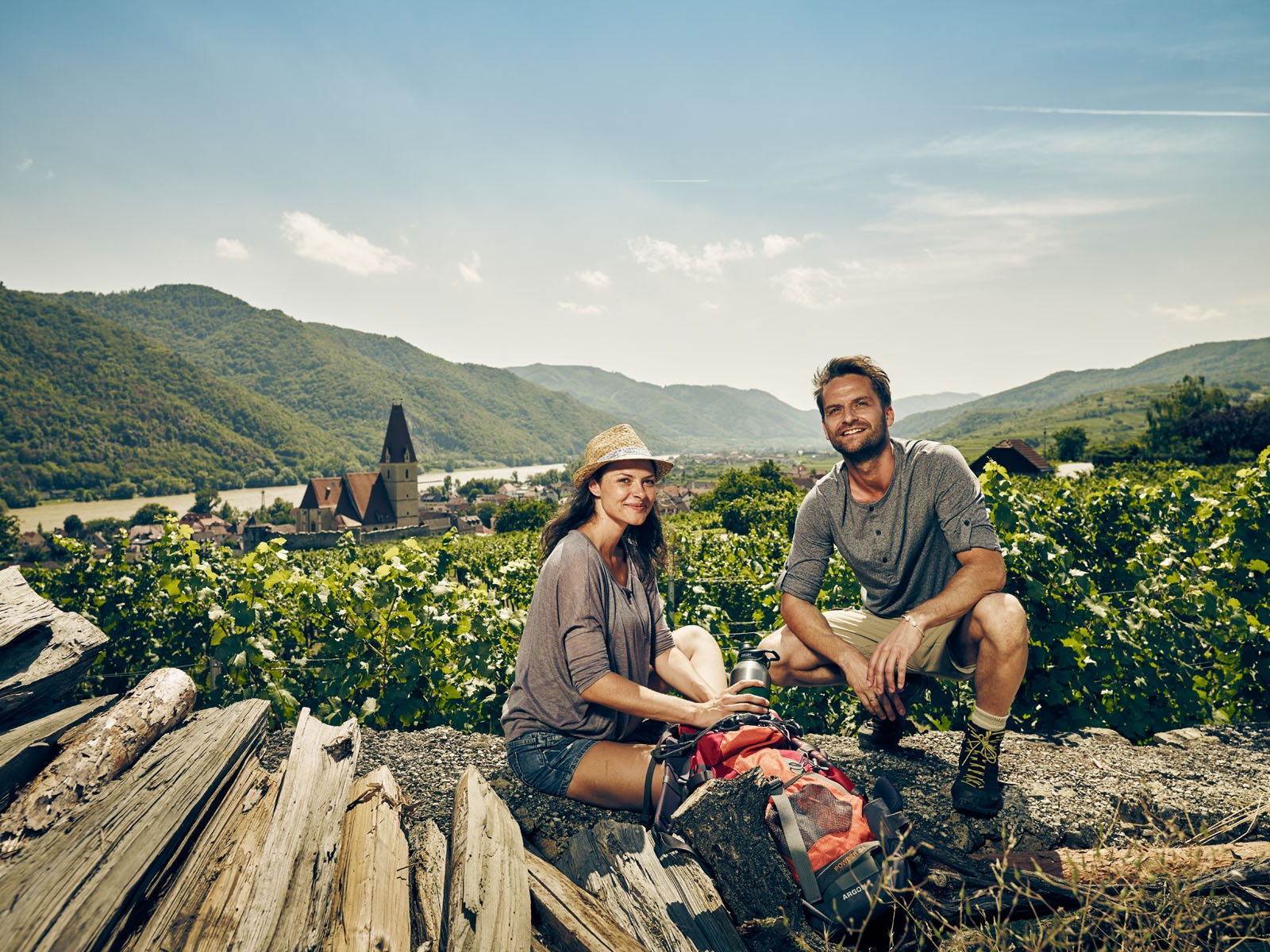
Sturdy hiking boots, rain protection, sufficient drinks and food, as well as a Wachau hiking map and a wine tavern calendar. An equipment list can be found at www.welterbesteig.at under the section Service/Tips.
In the picturesque old town of Dürnstein, we begin our hike. Just behind the Kremser Gate, we take on the old Eselsteig. There is a demonstration garden for Wachau saffron there. Via the old supply route with its stone steps within the city walls, we come to the Dürnstein castle ruins, which served as a prison for King Richard the Lionheart in the 12th century. We leave the ruins through the northern castle gate and dive into a bizarre rock and forest landscape. Our path leads through partly untouched oak and pine forests and passes the so-called small castle, the dilapidated outer bailey of the castle. After a steep climb, we reach the summit of the Schlossberg with the Starhemberg lookout. Five minutes later we come to the Fesslhütte (stamp station), where we take a restful break. Here begins the high trail to Weißenkirchen, which offers us repeatedly dreamlike views of the surroundings. After 5–10 minutes, we cross the Vogelbergsteig. Here, a detour to the left to the Dürnstein pulpit, one of the most spectacular viewpoints of the Wachau with a view of the Danube valley and old oak natural forests (approx. 10-minute approach), is worthwhile. Back at the junction, we continue right, at the first junction turn left and then loop downhill. We pass a barrier and then turn left and go downhill on a narrow path. We reach a first wider forest road and keep left, then three times in a row right. This high trail now leads us on an easy-to-walk forest road to the remote hamlet Schildhütten with the winery and wine tavern Pomaßl (stamp station). At the last house, turn right into the vineyards. Past old abandoned vineyards and collapsed stone terraces, we finally reach the Klaus and Achleiten vineyards. Uphill to the right, we reach the Achleiten vineyard with a collection of old and rare grape varieties (stock culture). Via the so-called Achleiten panorama trail, we hike through the vineyards into the Weißenkirchen district of Weitenberg. There we turn left onto a narrow footpath and come into the Weißenkirchen old town. Via the historic church path, we reach the fortified church and through the wooden stairs to the marketplace of Weißenkirchen with the magnificent Renaissance building Teisenhoferhof, where our stage ends.
Paid parking spaces near Dürnstein or at the Danube beach or train station in Weißenkirchen
A1 to St. Pölten junction, continue on S33 and B3 via Krems to Dürnstein or Weißenkirchen
The towns can be reached seven days a week by public transport (bus and Wachau railway). Return to the starting point of the hike is possible.
On the north bank of the Wachau, bus line 715 runs Krems-Spitz-Melk or Melk-Spitz-Krems. www.vor.at
The Wachau railway runs from the end of March to the end of October only on weekends and public holidays, daily from July to the end of September. www.wachaubahn.at
Stations for the rental bike Nextbike are located in Krems and Dürnstein. www.nextbike.at
With the following ferries, you can quickly cross the Danube bank:
-Roll ferry Weißenkirchen-St. Lorenz www.weissenkirchen-wachau.at
-Bike ferry Dürnstein-Rossatz www.faehre-wachau.at
Right at the beginning of the stage, on the Eselsteig in Dürnstein, there is a demonstration garden of the Wachau Saffron Manufactory. This precious culinary plant always blooms from October to November.
Best of Wachau: You’ll find the most renowned and highly recommended restaurants and lodging options in the Wachau UNESCO World Hertige site at Best of Wachau.
Fesslhütte, Dürnsteiner Waldhütten (stamp station): Summer season: April–October. Winter hours available upon request.
Pomaßl Wine Tavern and Refreshment Station, Weißenkirchner Schildhütten (stamp station)
The refreshment station (water, non-alcoholic beverages, and wine) is always accessible and is located in the refrigerator below the stamp station.
For more information on places to stop for refreshments and lodging, visit www.wachau.at. Please note the reduced opening hours of Weißenkirchen’s restaurants and bars during the winter (November–March): www.weissenkirchen-wachau.at.
Wine taverns can be found in Dürnstein, Schildhütten (Pomaßl stamping and refreshment station), and in Weißenkirchen. Several wine taverns are open in winter. Please check the current wine tavern calendar.
Letzte Änderung: 7 Aug 2026