Schönberg am Kamp train station
Train station-
Schönberg am Kamp railroad station©
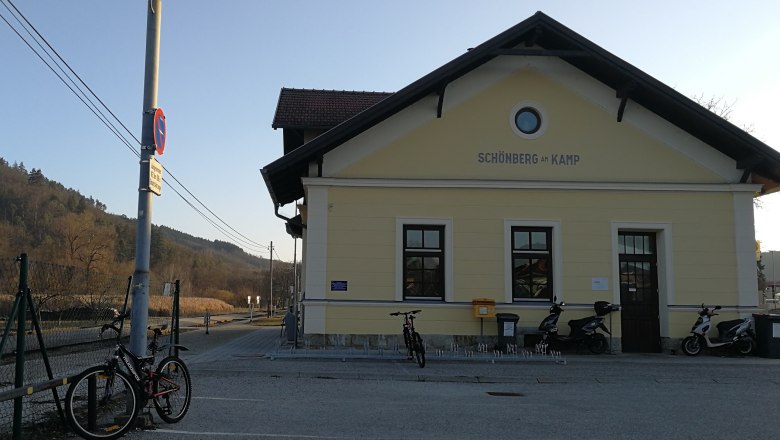
Description
The double-track Schönberg am Kamp station is based on the traditional design of Austrian station buildings with the typical corner ashlars and offers a convenient connection to the Kamptal line with an adjacent parking lot. During the week, trains run every hour in the direction of Hadersdorf/Kamp and Sigmundsherberg, with short transfer times to the connection to Vienna.
As soon as you get off the train at Schönberg am Kamp station, visitors are greeted by an impressive landscape with vineyards as far as the eye can see. The sunny climate, which is partly responsible for the region's best wines, is also reflected in the sunny dispositions of the countless wine taverns and places to stop for refreshments. There is hardly a spot where the door of a winegrower or a wine cellar is not open and invites you to taste and linger.
The Schönberg am Kamp educational wine trail is about a 10-minute walk from the train station. An easy circular trail that leads through vineyards and offers variety with explanations of the different grape varieties and types of cultivation.
A very special experience can be found just a 5-minute walk from the station: the ostrich country in the Kamp Valley ("Kamptal" in German). This entertaining excursion destination for young and old offers lots of information about the curious animals. The spacious facility with its courageous operators is worth a visit in itself, but the farm's ostrich babies are probably the real stars.
Out into the countryside with the "Busserlzug"
The opening of the Kamptalbahn line not only promised an economic upturn for the market town of Schönberg am Kamp, many villages along the Kamp also benefited from the easy accessibility. It was not only the easier transportation of agricultural produce by freight to Vienna that was well received. Many city dwellers became increasingly interested in the rural area and its benefits as a source of recreation and relaxation. This led to the tradition of the summer retreat. As women and children often spent the whole summer in the nature-spoiled areas of the Kamp Valley ("Kamptal") while the men went about their work in the towns, the term "Busserlzug" (bus train) was coined due to the farewell and welcome scenarios that could be observed at the stations along the Kamp Valley ("Kamptal") railway line.